Home Gym
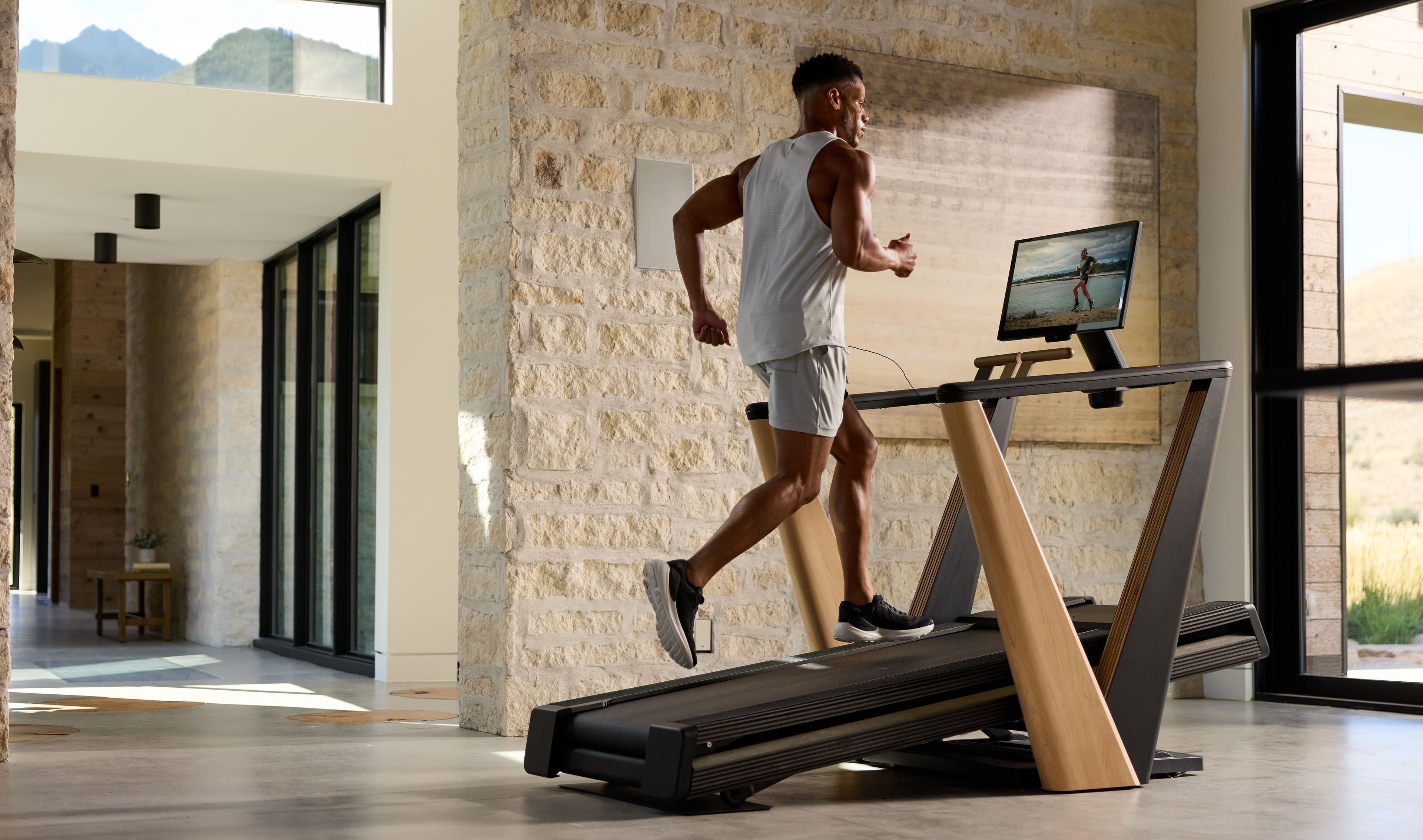
NordicTrack Ultra 1 Wins the Red Dot Award: Product Design 2026
The NordicTrack Ultra 1 has earned a Red Dot Award for Product Design 2026, its third major honor in under a year alongside Esquire and TIME recognition.
July 7, 2026
Read More
Top Cardio Workouts on the iFIT Fitness App
As an essential facet of healthy living, aerobic exercise contributes to keeping your body mobile and functional. Cardiovascular activity1 is important throughout our lives, helping improve cardiovascular health, maintain healthy weight, and much more. In fact, the U.S. Department of Health and Human Services recommends at least 150 minutes per week of moderate-intensity activity2. One of the activity guidelines is simply, “Move more and sit less!” With iFIT, you can reach that 150-minute recommendation without ever leaving home. In our expansive workout Library, there are workout series for virtually anyone, no matter their fitness level. Beginners and seasoned athletes alike can find accessible workouts. With so many options, you may wonder which workouts are the most popular at iFIT right now. Maybe there’s a cardio workout you’ve heard about and want to try for yourself. If this is the case for you, then you might just find it here among our top cardio workouts! We’re covering 2021’s top iFIT cardio workouts for treadmill, elliptical, bike, rower, and strength. Whether you have one or more types of equipment, you can try these cardio workouts and find out what the buzz is all about. If you’re new to iFIT, get ready for many exciting virtual trips around the world with our trainers. If you’re a seasoned iFIT member, some of these workouts may be fun to revisit, and others might be new adventures to embark on! Top 5 cardio workout series on treadmill and elliptical 1. Bolivia Beginner Cardio HIIT Series Head to South America with iFIT Trainer Hannah Eden to sharpen your HIIT skills! You’ll encounter incline walks and cross-training, as well as power jogs and more. This cardio workout series will help build your cardiovascular foundation! With beautiful sights like Lake Titicaca, Sajama National Park, and the Tunupa Salt Flats, these workouts showcase all the incredible terrain of Bolivia. 2. Costa Rica Cardio HIIT Series From forests and coffee farms to beaches and national parks, Costa Rica has it all! Work out with iFIT Trainer AnaMaria Ramirez in this challenging HIIT series to build strength and endurance while sightseeing all around the country. Travel to popular destinations like Playa Grande, the Santa Elena Cloud Forest Reserve, and Playa Flamingo. Pura Vida! 3. Train Like A Pro: Alex Morgan Cardio Soccer fans rejoice! In this special cardio series, professional women’s soccer player and iFIT Trainer Alex Morgan takes you through a series of six workouts that mirror pro-level programs. Filmed in sunny Florida, you’ll work through a variety of cardio exercises with Alex as your personal trainer. Show that you're up for the challenge when you team up with Alex! 4. Vietnam Intermediate Cardio HIIT Series In this HIIT series, iFIT Trainer Hannah Eden takes you through the rich landscapes of northern and central Vietnam. This 30-part cardio series brings the heat with both cardio and strength exercises done Hannah’s way. Over the next six weeks, you’ll get to know her intense training style and much of Vietnam! 5. Iberian Beginner Running Series As one of iFIT Trainer Tommy Rivs Puzey’s most beloved training series, the Iberian Beginner Running Series guides you through the fundamentals of running coupled with his incredible knowledge of the areas you’ll be training in. Filmed in beautiful Portugal and Morocco, this cardio series is one you don’t want to miss if you’re new to running! Top 5 cardio workout series on bike 1. Costa Rica Beginner Cycle Series Ride in gorgeous Costa Rica with iFIT Trainer John Peel in this 16-part cardio series. While working on your endurance and leg strength, you’ll visit stunning locations like Arenal Volcano, Matapalo Beach, Laz Paz Waterfall, and many more! 2. Strength and Cycle Series Get your heart pumping and legs turning with iFIT Trainer Tennille Boseman in this studio series! With 24 different cardio workouts, Tennille will help you boost your cardiovascular strength with full body cross-training exercises added to the mix. Get going on a new cardio workout when you start this studio workout series! 3. HIIT and Fit Cycling Series iFIT Trainer Gideon Akande will test your cardiovascular and muscular endurance in this studio cardio series! Power through these intermediate workouts with Gideon to add on to your biking foundation. If you’ve completed his Get Cycling Series, then this is a perfect continuation of Gideon’s training. 4. Get Cycling Series Ready to chip away at your endurance? Join iFIT Trainer Gideon Akande in the studio for 10 beginner endurance interval workouts. If you’re new to bike workouts, then this series is a great jumping-off point! Learn the basics and develop your skills with these cardio workouts, and then move on to his HIIT and Fit Cycling Series. 5. Total-Body Toning Series Love iFIT Trainer Tennille Boseman, but not quite ready to join her Strength and Cycle Series? Consider this one instead! Tennille’s Total-Body Toning Series can help you build the endurance you need to tackle her more demanding iFIT series. After these 10 cardio workouts, you may feel prepared enough to tackle more challenging series! Top 4 cardio workout series on rower 1. 20 Minutes to Toned Get to rowing in Slovenia and Portugal with Olympian and iFIT Trainer Alex Gregory. In these 20-minute cardio workouts, Alex will coach you through Tabata exercises and tempo climbs as you row on Lake Bled and Lake Avis. Take in the picturesque sights in these beautiful locations while working on your rowing speed and power! 2. HIIT Cardio and Cross Training In this workout series, iFIT Trainer Tennille Boseman coaches you through high-intensity rowing and bodyweight cross-training. Her fast-paced workouts will help you improve your cardiovascular and muscular fitness. Stick with Tennille and get ready to sweat! These may be tough, but worth the effort you put into them. 3. Getting Started with Rowing New to your rower? No problem! iFIT Trainer Christian Mazzilli’s beginner rowing series will help you nail down the basics of rowing, including how to properly row with technique and conquer your stroke rate. Start building your endurance with Christian, and then schedule your next rowing workout on the iFIT cardio app! 4. Studio Rowing Series Sharpen your rowing technique with iFIT Trainer Alex Silver-Fagan in the Studio Rowing Series. While she’ll coach you through technique practice, Alex will also emphasize flexibility movements, rowing intervals, bodyweight exercises, and more to help you become a better rower! Top 4 strength workout series 1. Iceland Strength Series Grab your coat and travel to chilly Iceland with iFIT Trainers Hannah Eden and Jonnie Gale in the Iceland Strength Series! Over 18 workouts, Hannah and Jonnie will coach you through HIIT sessions with both your bodyweight and dumbbells. 2. Iceland Cardio HIIT Series Head north with iFIT Trainer Hannah Eden to beat the cold with fast-paced HIIT workouts. While you’re training hard, you’ll visit the capital city of Reykjavik, the West Fjords, the Seljalandsfoss waterfall, and more! 3. Bodyweight Cardio Series How about something new for your next strength workout? Pair up with iFIT Trainer Ashley Paulson for some equipment-free workouts that will get you fired up! When you work with Ashley, you’ll power through kickboxing workouts, bodyweight cardio exercises, and more to help you build strength. 4. Beginner Plus Bodyweight Cardio Series Ready to build onto your strength foundation, but not ready to make the leap to intermediate-level workouts? Join iFIT Trainer Ashley Paulson in her Beginner Plus Bodyweight Cardio Series! Over six studio strength workouts, including cardio bodyweight exercises, Ashley will help you work your entire body. Start an iFIT cardio workout today iFIT cardio workouts are designed to feel immersive and engaging, with world-class trainers leading the way. When you sign up, your next home workout will be transformed with cardio workouts like these. Whether you’re thinking about starting a new fitness journey or looking for a new workout series to try on our fitness app, iFIT is here to help you reach your goals. References 1. Marcin, A. (2020, February 25). What are the benefits of aerobic exercise? Healthline. https://www.healthline.com/health/fitness-exercise/benefits-of-aerobic-exercise. 2. Office of Disease Prevention and Health Promotion. (n.d.). Top 10 things to know about the second edition of the physical activity guidelines for Americans. Health.gov. https://health.gov/our-work/nutrition-physical-activity/physical-activity-guidelines/current-guidelines/top-10-things-know. Disclaimer: This blog post is not intended to replace the advice of a medical professional. The above information should not be used to diagnose, treat, or prevent any disease or medical condition. Please consult your doctor before making any changes to your diet, sleep methods, daily activity, or fitness routine. iFIT assumes no responsibility for any personal injury or damage sustained by any recommendations, opinions, or advice given in this article. Always follow the safety precautions included in the owner’s manual of your fitness equipment.
December 9, 2021
Read More
4 iFIT Series for a Full Upper Body Workout
If you thought iFIT workouts were solely meant for strengthening your lower body, think again! Outside of compelling workout series designed to help you build strength and stamina in your legs, iFIT also has many more fitness options that you may not know about. We’re all about body balance, offering engaging workouts geared toward improving both your lower and upper body when done properly and regularly. What do we mean when we say “upper body?" Which body parts are we including in that umbrella term? In this instance, we’re talking about the muscle groups located in your chest, shoulders, back, and arms. Maybe you’re interested in chest workouts or other upper body workouts that target your biceps and triceps. You may even want to exercise all four of these muscle groups in your weekly workout regimen! With iFIT, your next upper body workout is only a few taps away. We’re taking a closer look at the main muscle groups in your upper body and pairing each group with a corresponding iFIT workout series to help you get started. With this quick overview, you’ll have a better understanding of how the muscles in your chest, shoulders, back, and arms work. Whether you’re looking for an at-home back, shoulder, arm, or chest workout, read on to find your next upper body workout! Chest muscles The chest muscles are responsible for many of our bodily functions, some of which you may not realize. These muscles, including the pectoralis major and minor, help us breathe, move our arms, hold on to heavy objects, and more. There are also a variety of benefits that come from working out your chest1, so let’s get to know the muscles that make up this portion of your upper body. Pectoralis major2 The two pectoralis major muscles (AKA your “pecs”) make up the majority of your chest. These muscles are in charge of pulling your rib cage up during deep inhalation, so your lungs have room to expand. The pectoralis major also helps with arm movement, especially with pushing movements like bench press or push-ups. Pectoralis minor3 Beneath the pectoralis major is a very flat muscle called the pectoralis minor. This chest muscle directly aids your scapula (AKA your shoulder blades), helping with abduction, protraction, depression, upward tilt, and downward rotation. During a chest press exercise, your pectoralis minor helps move your shoulder blades back and forth. Serratus anterior4 Known as the “boxer’s muscle,” the serratus anterior is responsible for scapular movement, much like the pectoralis minor. It allows for protraction and retraction of the scapula, which is like reaching your arm straight out in front of you and then pulling it back. The serratus anterior also assists with breathing and overhead lifting. iFIT chest workout If you’re looking for upper body workouts that target your chest, give an iFIT workout a try! Many of our strength workouts feature curated chest exercises by our team of personal trainers. Consider iFIT Trainer Gideon Akande’s Strength Training 101 Series, which takes you through 15 beginner workouts. In this lower and upper body series, Workout 10 specifically focuses on chest exercises! Shoulder muscles Assisting in virtually all upper body movements, your shoulders help you push, pull, lift, and press down. Your shoulders are naturally integrated into chest, back, and arm exercises. Deltoid5 Your deltoid is the largest part of your shoulder, creating the rounded shape atop your triceps and biceps. With three different heads, this muscle keeps joint dislocation at bay, assists in arm rotation, and makes carrying heavy loads easier on the upper body. When you’re holding something away from your body (like several bags of groceries), your deltoids help power these motions and keep the shoulder joints safe. Infraspinatus, teres minor, supraspinatus, and subscapularis6 These four muscles comprise your rotator cuffs, which provide stability to your shoulders. While each of these interior shoulder muscles aid your arms in specific ways, the rotator cuffs themselves allow your arms to rotate, raise, lower, and move away from your body. Think of these muscles as you perform upper body exercises like shoulder presses and lat raises. iFIT shoulder workout You can start trying to build strength and muscle in your shoulders with iFIT Trainer John Peel! In his Resistance Band Miniseries, John will coach you through seven challenging workouts that each fall under an hour. While the miniseries is a must-try, Workout 3 may just be the upper body class that you’re looking for! If you enjoy it, find more like it on our fitness app. Back muscles Your back is to thank for your upper body’s ability to move. Your back muscles provide the structural support your spine, neck, head, shoulders, and arms need. Every time you bend down to tie your shoe, twist in your chair to talk to someone, or reach up for a big morning stretch, your back muscles activate. Making up a large portion of your upper body, your back has many muscles that work in sync to help you move! Trapezius7 The trapezius, sometimes referred to as the “traps,” is positioned on your upper back behind your shoulders and neck. This muscle helps you move your shoulder blades and neck, as well as remain erect while standing. While performing shoulder shrugs, your trapezius facilitates the up and downward motion of your shoulders. Levator scapulae8 The levator scapulae is a back muscle that functions to raise your shoulder blades in conjunction with the trapezius. In bouts of neck stiffness, this muscle is usually involved, as it’s positioned at the sides of your neck connecting to the scapulae. Rhomboids9 Comprised of the rhomboid major and minor, this muscle group is located in the upper middle section of your back. Rhomboids facilitate scapular retraction and provide stability to your scapulae and shoulder girdles. Latissimus dorsi10 As the largest muscle in your back, the latissimus dorsi symmetrically spreads across your spine. Working with the pectoralis major and teres major, this muscle contributes to upper extremity motion. When you raise your arms for a pulldown exercise, your latissimus dorsi stretches to allow for this upper body movement. iFIT back workout Try challenging your lats, traps, and other back muscles with the Next-Level Strength Training Series! With iFIT Trainer John Peel, you’ll move through 12 weeks of strength exercises focused on your entire body, including your back. If you’re ready for a challenge, John can bring it over the course of 42 workouts! Arm muscles Arm workouts are a favorite of fitness lovers all over the world. In upper body classes, you will usually encounter some arm exercises. Besides existing as an aesthetic muscle group, your arms make much of your everyday life a reality! Every push, pull, and lifting motion is made possible by the biceps brachii and triceps brachii. Biceps brachii11 Your biceps, as you may have guessed, are located on the front of your upper arms. These muscles assist in elbow flexion, allowing you to raise your forearms up at the elbows (as with a bicep curl) and turn your palms inwards. When at rest, your biceps naturally overpower the triceps12. This is why your arms appear slightly bent at your sides! Triceps brachii13 As the antagonist muscle of the biceps brachii, the triceps brachii is situated on the back side of your arms. This muscle allows for extension of the elbow joint, which is what lets you place your arms straight down or out. Your triceps also help stabilize your elbows, which is needed for movements requiring precision. iFIT arms workout Ready to make your next home workout one to remember? Work on your biceps and triceps with iFIT Trainer Paulo Barreto in his Functional HIIT Series! Focusing on cardiovascular and muscle endurance, Paulo will guide you through workouts that target specific muscle groups. Many of these HIIT workouts target your arm muscles, so get ready for lower and upper body strength exercises! Start an iFIT upper body workout today Now that you know much more about the major muscle groups that make up your chest, shoulders, back, and arms, you can put that knowledge to use with iFIT upper body workouts. When you sign up for a 30-day free trial of our fitness app, you’ll gain access to a huge selection of strength workouts you can do right from your home gym. Designed for all fitness levels, our workouts, if done properly and regularly, may meet you where you’re at in your fitness journey. Even if you’re a beginner, you can get going with our beginner-level workouts today! Whether you choose to knock out the previously suggested workouts or find more on your own, you can do them anywhere! Try a chest workout while on your lunch break or an arms workout during your seasonal vacation. Make an iFIT workout a part of your daily schedule or download the fitness app for on-the-go workouts. Upper body exercise is crucial for functional living, helping you continue to do all the things you enjoy. With an iFIT personal trainer leading you through each workout, you’ll feel these upper body muscles working hard! References 1. Northside Hospital. (2019). 4 unexpected benefits of chest exercises. 4 Unexpected Benefits Of Chest Exercises. https://www.everydaywellness.org/community-health/blog/4-unexpected-benefits-of-chest-exercises. 2. Healthline Editorial Team. (2018, January 24). Pectoralis major. Healthline. https://www.healthline.com/human-body-maps/pectoralis-major-muscle#1. 3. Healthline Editorial Team. (2018, January 19). Pectoralis minor. Healthline. https://www.healthline.com/human-body-maps/pectoralis-minor#1. 4. Lung, K., St Lucia, K., & Lui, F. (2021, October 7). Anatomy, thorax, serratus anterior muscles. NCBI. https://www.ncbi.nlm.nih.gov/books/NBK531457/. 5. Healthline Editorial Team. (2018, January 20). Deltoid. Healthline. https://www.healthline.com/human-body-maps/deltoid-muscle#1. 6. Healthline Editorial Team. (2018, January 23). Shoulder muscles. Healthline.https://www.healthline.com/human-body-maps/shoulder-muscles#1. 7. Ourieff, J., Scheckel, B., & Agarwal, A. (2021, July 26). Anatomy, back, trapezius. NCBI. https://www.ncbi.nlm.nih.gov/books/NBK518994/. 8. Henry, P. J., & Munakomi, S. (2021, August 13). Anatomy, head and neck, levator scapulae muscles. NCBI. https://www.ncbi.nlm.nih.gov/books/NBK553120/. 9. Farrell, C. & Kiel, J. (2021, July 26). Anatomy, back, rhomboid muscles. NCBI. https://www.ncbi.nlm.nih.gov/books/NBK534856/. 10. Jeno, S. H., & Varacallo, M. (2021, August 11). Anatomy, back, latissimus dorsi. NCBI. https://www.ncbi.nlm.nih.gov/books/NBK448120/. 11. Tiwana, S. M., Charlick, M., & Varacallo, M. (2021, August 11). Anatomy, shoulder and upper limb, biceps muscle. NCBI. https://www.ncbi.nlm.nih.gov/books/NBK519538/. 12. Tiwana, S. M., Sinkler, A. M., & Bordoni, B. (2021, August 6). Anatomy, shoulder and upper limb, triceps muscle. NCBI. https://www.ncbi.nlm.nih.gov/books/NBK536996/. 13. Tiwana, S. M., Sinkler, A. M., & Bordoni, B. (2021, August 6). Anatomy, shoulder and upper limb, triceps muscle. NCBI. https://www.ncbi.nlm.nih.gov/books/NBK536996/. Disclaimer: This blog post is not intended to replace the advice of a medical professional. The above information should not be used to diagnose, treat, or prevent any disease or medical condition. Please consult your doctor before making any changes to your diet, sleep methods, daily activity, or fitness routine. iFIT assumes no responsibility for any personal injury or damage sustained by any recommendations, opinions, or advice given in this article. Always follow the safety precautions included in the owner’s manual of your fitness equipment.
November 15, 2021
Read More
Your Guide to Core Workouts
When you think about training your abs, what comes to mind? Good old-fashioned sit-ups? Planks? Many fitness enthusiasts know they need to include core exercises in their workout routine, but they end up forgetting about them or saying that they’ll “Do abs tomorrow.” We’ve all been there! Exercising your core is challenging since the abdominal muscles fatigue much faster than larger muscle groups, like those in your legs or back. In our daily lives, we use our abdominal muscles much more than we may realize. We can thank our abs for the ability to move, bend, twist, sit, and lift—all motions that use the core to stabilize the spine1. That’s right—your abs help stabilize your entire body! These muscles are much more than mere aesthetic features. So, what do you really need to know about ab training? We’re taking a deep dive into the abdominal muscles, explaining how they work, when and how often to train them, and exercises you can do to start working on your core at home. How the core works Let’s break down what the “abs” really are. In your core, there are four abdominal muscle groups, along with other stabilizers. These muscles effectively protect your internal organs, covering them like a shield. Before hopping into a new core workout routine, it’s helpful to first understand just how the abdominals work. Rectus abdominis The rectus abdominis2 is the core muscle that is commonly associated with ab definition and can look defined when exposed, but this depends greatly on each person individually. When you breathe in and brace your core, the rectus abdominis pulls in your abdomen. It assists in abdominal pressure and can improve sports performance when strengthened. Transverse abdominis As the deepest layer of the abdominal muscle group, the transverse abdominis3 is significant to the lumbar spine. It assists in maintaining abdominal tension, increasing intra-abdominal pressure (needed in forceful expiration, such as coughing), and supporting abdominal viscera. Internal oblique muscles The internal oblique muscles4 are found on the lateral sides of the abdomen, beneath the external obliques. Like the transverse abdominis, the internal obliques help maintain abdominal pressure and trunk movement. External oblique muscles Covering the sides of the abdominal region are the external oblique muscles5. Connecting to the pelvis, these are the outermost abdominal muscles that help rotate the trunk and pull the chest downwards to compress the abdominal cavity. These abdominal muscles work together to power all of your movements. Your core6 works non-stop to support your spine! When reaching into a high cabinet, bending over to pick up groceries, or sitting in a chair, your core engages to make these activities easier and, most importantly, possible. Plus, during core exercises, your lower back, hips, and pelvis are naturally roped into the mix. Your balance and stability7 may improve with regular core workouts. Even outside of fitness, a strong core can help keep you mobile in daily life. How often should you do core workouts? Some may suggest a workout routine that includes core exercises every day for strong abdominal muscles. As with training other muscle groups, daily abs workouts could result in overuse injuries. According to Harvard Health8, you can do core workouts two to three times a week and notice gradual changes along the way. It will take time to strengthen your abdominal muscles, so don’t get discouraged if planks or crunches feel difficult at first. The name of the game is controlled movement and breathing to maximize quality over quantity. Instead of quickly repping out a high number of sit-ups, try to perform a smaller number (like 5–10 reps) with better control and form. This may help activate your abdominals more effectively than quick, uncontrolled movements. Should core workouts come before, after, or during a strength or cardio workout? Now that you know how often you should train your core, one question remains: When should you do your core workout? This depends on the type of workout you plan to do, whether that is a strength or cardio workout. After a heavy weightlifting session, pivoting directly to a core workout may not be a wise choice. You might feel exhausted after a tough strength or cardio workout, in which case it may be better to hold off on adding more exercises. With this in mind, you can integrate core exercises before these types of workouts. The ab exercises you choose should not feel incredibly taxing. The goal should be to instead warm up the core for your strength workout, where you will use power generated from your abdominals during your weight lifting or bodyweight routine. Consider performing ab exercises like dead bugs and bird dogs to warm up both your internal and external abs. These movements can also be used before a cardio workout, as a strong and stable core is essential for walking, running, and hiking. You may also have a day dedicated to targeted core exercises if you’d like! Your abdominal muscles will likely fatigue well under an hour, so this type of exercise routine could be done on a recovery day from your regular strength or cardio training. Even a 10 minute ab workout may be helpful for exercising your core! Ultimately, the choice is yours based on how your body feels before, during, or after a workout. Targeted core exercises There are many core exercises out there, but the truth of ab workouts is that they don't need to be complicated and can be quite accessible. As mentioned above, control is the most important aspect of training these muscles. Think about your abs like this: The internal abdominal muscles, especially the transverse abdominis, are not visible. When strengthened (alongside the other three abdominal muscle groups), you may notice differences in your strength output as you continue on in your workouts. This is what matters! Exercises that isolate the abdominal muscles have also been found to improve muscle activation. In a recent study9 comparing electromyographic (EMG) activity in the rectus abdominis, oblique externus, and erector spinae in both integrated and isolated core exercises, results indicated that isolated core exercises (like bridges and back extensions) had greater muscle activation. This may mean that ab exercises that target the core alone are better for muscle engagement. Ready to add ab exercises to your workout routine? Here are a few targeted core exercises that you can try in the gym or as a home workout. Crunch Lie down on your back on a mat.Bend your knees and press your lower back into the floor. With your hands crossed over your chest or behind your head, slowly lift your head and shoulders off the floor. Exhale as you come up into the crunch.Lower yourself back down. Inhale during the descent.Repeat for 15-30 reps. Plank Position yourself on your hands and knees on a mat.Place your hands shoulder-width apart, directly under your shoulders. Your feet should be a bit wider than your hips but you can bring them closer together for a greater challenge.Bring your knees off the floor, so you’re balanced on your toes and hands (or elbows, if preferred).During the plank, keep your body straight, from your heels to your head. Look down at the floor to keep your spine neutral. Engage your core, quads, and glutes. Hold the plank position for however long feels comfortable. For example, beginners can aim for 10 seconds and increase the duration with practice. You can hold these up to 120 seconds. Do not let your hips or shoulders dip.Come out of the plank position and rest before trying again. Side kick front/back Lie on your side on the edge of your mat.Line your legs up, with your feet and knees stacked.Place your top hand in front of your chest. Prop your head up with your bottom hand.Engage your core so that it feels solid and stable.Lift your top leg up to hip height, flexing your foot towards your shin.Kick your leg out in front of you. Your upper body should not move. Use your bottom leg for stability.Then, without bending your leg, kick it back behind you. Do not arch your lower back.Make a sweeping motion as you repeat this exercise with control, moving your top leg back and forth. Aim for 10-20 reps. You’ll find these bodyweight exercises and many more in our fitness app! Browse a wide selection of bodyweight core exercises with iFIT Trainers like John Peel, Elyse Miller, Gideon Akande, and Jeni DelPozo. Secondary core exercises Since your core is involved in everything you do, these muscles engage during non-core-specific exercises, too. Squats, bench presses, push-ups, shoulder presses, deadlifts, and so many other exercises rely on a strong core for stability. As mentioned previously, your abs work to stabilize your spine. In movements like those listed above, the positioning of your spine is crucial for proper form and injury prevention. How does your core empower these strength exercises? At the root of your pushing and pulling abilities lies your body’s core power. With a developed core, an athlete will use these muscles to their advantage in sports like baseball, competitive weight lifting, boxing, tennis, marathon running, and more. In a 2019 study10 on the effect of core training on core endurance and running economy in college athletes, researchers divided the participants into control and core training groups. Each group continued with their regular training, but the core training group was given three additional core training sessions per week. After eight weeks of training, results suggested that supplementing core exercises with regular training may contribute to improved core endurance, running economy, and core stability. When you work on your core, you’re building up your body’s foundation. But what happens when you don’t do abs workouts? When the core muscles are weak, you can become more susceptible to muscle injury and lower back pain11. This is why it’s important to include core workouts into your weekly workouts. The functional benefits of strong abdominal muscles make it worth the time and effort! Start an iFIT core workout today You can get started on building core strength today with iFIT! When you sign up for iFIT, you’ll gain immediate access to our huge workout Library. You’ll find an array of ab workout options for different fitness levels. Many of these, like our Quick Core workout series, can be done right from your home gym in less than 20 minutes! With the encouragement of a personal trainer in every workout, you’ll feel inspired to power through a tough abs workout. Remember that core strength is key to both athletic and functional movement. Think less about the look of your abs and more about the power you can derive from them! References 1. Core conditioning: It's not just about abs. Harvard Health. (2012, May 22). https://www.health.harvard.edu/healthbeat/core-conditioning-its-not-just-about-abs. 2. Healthline Editorial Team. (2018, January 21). Rectus abdominis. Healthline. https://www.healthline.com/human-body-maps/rectus-abdominis-muscle#1. 3. Quinn, E. (2020). The importance of the transverse abdominis (TVA) muscle. Verywell Fit. https://www.verywellfit.com/core-stabilization-transverse-abdominis-muscle-3120587. 4. Healthline Editorial Team. (2018, January 19). Internal oblique. Healthline. https://www.healthline.com/human-body-maps/internal-oblique#1. 5. Healthline Editorial Team. (2018, January 19). External oblique. Healthline. https://www.healthline.com/human-body-maps/external-oblique-muscle#1. 6. Mayo Clinic Staff. (2020, August 29). Core exercises: Why you should strengthen your core muscles. Mayo Clinic. https://www.mayoclinic.org/healthy-lifestyle/fitness/in-depth/core-exercises/art-20044751. 7. Mayo Clinic Staff. (2020, August 29). Core exercises: Why you should strengthen your core muscles. Mayo Clinic. https://www.mayoclinic.org/healthy-lifestyle/fitness/in-depth/core-exercises/art-20044751. 8. How to add core exercises to your workout routine. Harvard Health. (2014, April 12). https://www.health.harvard.edu/staying-healthy/how-to-add-core-exercises-to-your-workout-routine 9. Saeterbakken, A. H., Chaudhari, A., Tillaar, R. van den, & Andersen, V. (2019, February 27). The effects of performing integrated compared to isolated core exercises. PLoS One. https://doi.org/10.1371/journal.pone.0212216. 10. Hung, K. C., Chung, H. W., Yu, C. C., Lai, H. C., & Sun, F. H. (2019, March 8). Effects of 8-week core training on core endurance and running economy. PloS One. https://doi.org/10.1371/journal.pone.0213158. 11. Mayo Clinic Staff. (2020, August 29). Core exercises: Why you should strengthen your core muscles. Mayo Clinic. https://www.mayoclinic.org/healthy-lifestyle/fitness/in-depth/core-exercises/art-20044751. Disclaimer: This blog post is not intended to replace the advice of a medical professional. The above information should not be used to diagnose, treat, or prevent any disease or medical condition. Please consult your doctor before making any changes to your diet, sleep methods, daily activity, or fitness routine. iFIT assumes no responsibility for any personal injury or damage sustained by any recommendations, opinions, or advice given in this article. Always follow the safety precautions included in the owner’s manual of your fitness equipment.
October 18, 2021
Read More
What Are Tabata Workouts?
You may have heard the word “Tabata” passed around in the fitness industry, but you may not be completely familiar with this type of workout. If you’ve done an iFIT HIIT workout, chances are you’ve worked through a Tabata-style circuit. While Tabata is not a direct synonym of HIIT, it is a specific type. Between the two, the rest periods are the primary difference. HIIT workouts are very versatile from workout to workout, meaning the rest periods are shorter or longer depending on the routine. Tabata exercises, however, have a set structure that does not vary. Developed in 1996 by Dr. Izumi Tabata, this style of exercise is quite unique in its setup. Tabata exercises1 are primarily four minutes long. During this time, 20 seconds are spent engaged in work (like burpees, air squats, or jumping rope), followed by 10 seconds of rest. This 20-10 pattern is repeated until you reach four minutes. True Tabata occurs over eight 4-minute intervals. According to Dr. Tabata’s study above, his fast-paced, high-intensity method keeps your heart rate elevated. With Tabata, you have the potential to do a great amount of work in a short amount of time, as maintained by Tabata’s research. Could Tabata be a fun, worthwhile workout option for you? We’re breaking down everything you need to know about Tabata workouts, from fitness benefits to sample workout routines you can get started on right away. Once you’ve tried a few Tabata moves, you can get going with a trainer-led iFIT Tabata class that is sure to challenge your cardiovascular fitness! What are the benefits of Tabata workouts? Can a four-minute exercise round really contribute to overall health? This is a valid question, as you might struggle to see the merit in such a short workout duration. However, as Dr. Tabata discovered in his 1996 study2, Tabata’s short time frame coupled with explosive exercises contributes to cardiovascular conditioning. In Dr. Tabata’s study, the anaerobic capacities and V02 max3 scores of the experimental group were both observed to be elevated as a consequence of Tabata-style exercise (specifically with exercise bicycle training). Though the study is now over 20 years old, the benefits of Tabata workouts continue to hold true. There are many perks of Tabata training that, when paired with regular exercise and a healthy diet, can up your fitness game! If you’re wondering if Tabata workouts are right for your goals, here’s what you need to know. Tabata is time-friendly If you find yourself short on time more often than not, you’re not alone. Many skip out on lengthy exercise sessions due to other important time commitments like family, school, or work. If this sounds like you, Tabata exercise could be a great choice for getting back into a fitness routine. Since workout rounds are kept within a 4-minute time frame, you can either give it your all during those four minutes or complete eight rounds for a true Tabata workout. You’ll get an effective workout in well under 30 minutes, making it a great option for lunch break athletes, early risers, busy parents, and virtually anyone else! It trains your body to quickly adapt Tabata is excellent for increasing aerobic capacity. If you’re searching for a new kind of challenge, Tabata delivers high-intensity work. In a 2017 study4 examining the effect of Tabata training on aerobic capacity, researchers grouped 18 female futsal (akin to indoor soccer) players. After Tabata training, the participants’ V02 max scores were higher, indicating an increase in aerobic capacity. These results may suggest that the participants quickly adapted to the high-intensity nature of Tabata training, which can influence cardiovascular conditioning. As you get accustomed to Tabata exercises, you will find that you have an easier time pacing yourself and controlling your breathing during the workout. You can thank your body for this, as it works hard to adapt to the challenges you engage in. Tabata is effective for cardiovascular health As a variation of HIIT, Tabata exercises5 are very high-intensity, which makes them incredibly helpful for building cardiovascular conditioning. During the 20-second burst of activity, you’ll quickly rep out the exercise at hand. Over time, your conditioning should improve as you become more proficient at Tabata workouts. This is why many endurance athletes use Tabata exercises as preparation for longer periods of running or cycling. Even if you’re more interested in weightlifting, a few Tabata intervals offer a perfect way to warm up your muscles with a quick cardio workout. It boosts your metabolism and offers greater caloric burn Coupled with the spike in heart rate, doing a Tabata workout may contribute to an increase in your overall caloric expenditure. In a 2013 study6 funded by ACE, participants engaged in 20-minute Tabata workouts (five 4-minute Tabata rounds). The results of the study indicated that Tabata workouts can improve cardiorespiratory endurance and may contribute to an increase in caloric expenditure. Group a few Tabata workouts together (eight for a full session) and get your sweat on! Tabata workouts do not require equipment If you don’t have a home gym, Tabata exercises may be the perfect fit for you! You can do a Tabata-style workout with exercises like mountain climbers, tricep dips, lunges, and push-ups. Bodyweight alone can deliver a grueling workout just like a routine with dumbbells or resistance bands. Not only can Tabata be your next home workout, but you can also knock Tabata exercises out on the go. Since they’re short, you won’t feel like you need to break away from a family vacation or work trip to exercise. Tabata is also a good option for on-the-go users since it doesn’t require much space (depending on the chosen exercises). You can get your heart pumping with a few Tabata exercises and feel good about ticking that workout box for the day! Tabata exercises are worthwhile for beginners Since Tabata exercises are four minutes long, they can be a great place to start for those new to fitness. Unlike a longer HIIT session, these are easier to acclimate to, especially when you’re a beginner. You’ll be able to work on your conditioning in short spans of time. This will pay off in the long run, as you’ll have improved endurance and physical ability to tackle more challenging types of workouts in the future. What are some examples of Tabata exercises? You may be thinking that Tabata workouts sound interesting enough to try. Luckily, putting together a Tabata workout can be very easy! Here are a few sample exercises you can try today. Tackle single exercise Tabata workouts or opt for routines that involve several different movements. If you’re a beginner, it may be best to start with a single exercise Tabata routine. Single exercises Try single exercises like burpees, push-ups, or planks in this format: 20 seconds on10 seconds offRepeat 8x Multiple exercises Air squats and lunges (one air squat and one lunge on each leg = one repetition) 20 seconds on 10 seconds offRepeat 8x Burpees and tuck jumps (one burpee and one tuck jump = one repetition) 20 seconds on10 seconds offRepeat 8x Squat thrusts and frog jumps (one squat thrust and one frog jump = one repetition) 20 seconds on10 seconds offRepeat 8x Try an iFIT Tabata workout If home workouts have felt boring or unorganized in the past, iFIT can change your perspective on at-home fitness! In our incredible workout Library, we offer over 100 Tabata-style workouts led by our world-class personal trainers. Our Tabata classes are engaging and motivating, challenging you to bring your very best to every workout session. Your next home workout doesn’t have to feel lackluster when you have the support of an iFIT Trainer and the structured format of a Tabata class! When you sign up for the iFIT fitness app, you can jump right into a Tabata class with a personal trainer pushing you through those tough four minutes. Our workouts are filmed in stunning locations all over the world, so you’ll get the opportunity to knock out Tabata workouts in the Caribbean, Italy, Turkey, and so many other must-see locales. Our Trainers will help keep you pumped the entire time, so you can keep moving forward toward your fitness goals. With Tabata, you can put in hard work and feel good about taking time for yourself without sacrificing substantial time. That is, you can get in an effective workout in under 30 minutes during a lunch break or in the early morning before your busy day starts. Top 10 iFIT Tabata workouts With iFIT-enabled equipment, you can sign up for Tabata workouts that incorporate high-intensity running, cycling, and rowing in the classic four-minute format. Many of our workout series use Tabata for equipment-based workouts instead of bodyweight. These will help boost your cardiovascular fitness as you go all-out on your treadmill, elliptical, bike, rower, or strength machine. Here are our top 10 Tabata workouts, each of which are a part of a longer workout series. Camel Rock Tabata Ride, Cappadocia, Turkey (Progressive Power Series) Rumeli Feneri Tabata Ride, Istanbul, Turkey (Progressive Power Series) Love Valley Tabata Ride, Cappadocia, Turkey (Progressive Power Series) Lake Bled, Slovenia—Tabata (20 Minutes to Toned Series) Starfish Point Tabata Ride, North Side, Cayman Islands (Caribbean Cycling Basics) Venice City Run, Italy (Italy HIIT Series) Wk 2 Wkt 2 - Pk18 Beach Bootcamp, Tahiti, French Polynesia (Bora Bora Bootcamp Series) Negril Lighthouse Tabata Ride, West End, Jamaica (Caribbean Cycling Basics) Doctor’s Cave Beach Tabata Ride, Montego Bay, Jamaica (Caribbean Cycling Basics) Huaca Jog/Cross Train, Bolivia (Bolivia Beginner Cardio HIIT Series) Which Tabata workout will you choose first? Start a new fitness journey with our Tabata classes to see for yourself how powerful these short, high-intensity workouts can be. References 1. Tabata, I., Nishimura, K., Kouzaki, M., Hirai, Y., Ogita, F., Miyachi, M., & Yamamoto, K. (1996). Effects of moderate-intensity endurance and high-intensity intermittent training on anaerobic capacity and VO2max. Medicine and science in sports and exercise, 28(10), 1327–1330. https://doi.org/10.1097/00005768-199610000-00018. 2.Tabata, I., Nishimura, K., Kouzaki, M., Hirai, Y., Ogita, F., Miyachi, M., & Yamamoto, K. (1996). Effects of moderate-intensity endurance and high-intensity intermittent training on anaerobic capacity and VO2max. Medicine and science in sports and exercise, 28(10), 1327–1330. https://doi.org/10.1097/00005768-199610000-00018. 3. Quinn, E. (2020). VO2 max testing in athletes: Measuring cardio fitness and endurance capacity. Verywell Fit. https://www.verywellfit.com/what-is-vo2-max-3120097. 4. Imanudin, I., & Sultoni, K. (2017, March 1). Tabata training for increasing aerobic capacity. IOP Science. https://doi.org/10.1088/1757-899X/180/1/012205. 5. McMahan, I. (2021, February 18). What is a tabata workout? And should you be doing them? Today. https://www.today.com/health/should-you-be-doing-tabata-workouts-t209403. 6. Emberts, T., Porcari, J., Dobers-Tein, S., Steffen, J., & Foster, C. (2013, September 1). Exercise intensity and energy expenditure of a tabata workout. Journal of Sports Science & Medicine, 12(3), 612–613. https://www.ncbi.nlm.nih.gov/pmc/articles/PMC3772611/. Disclaimer: This blog post is not intended to replace the advice of a medical professional. The above information should not be used to diagnose, treat, or prevent any disease or medical condition. Please consult your doctor before making any changes to your diet, sleep methods, daily activity, or fitness routine. iFIT assumes no responsibility for any personal injury or damage sustained by any recommendations, opinions, or advice given in this article. Always follow the safety precautions included in the owner’s manual of your fitness equipment.
September 24, 2021
Read More