Wellness

Exercise While Taking GLP-1: A Muscle-First Plan
Navigating a calorie deficit on GLP-1 medications often brings unexpected side effects like lower energy and fatigue. Pushing through exhaustion isn't the answer—moving smarter is. This muscle-first guide dives deep into the essential lifestyle pillars that support your training consistency. Learn how precise hydration habits defend against fatigue, and discover the striking science of how sleep duration directly impacts your body composition during weight loss. Complete with a flexible, one-week sample schedule, this guide shows you how to adjust your training intensity on tired days so you can protect your progress without overexertion.
May 26, 2026
Read More

iFIT Trainer Casey Gilbert Shares His Journey to Well-Being
May marks Mental Health Awareness Month, a time to fight the stigma, raise awareness, and support the millions of people around the world living with mental health conditions. We spoke with iFIT Trainer Casey Gilbert, who shared what mental health means to him, challenges he’s faced, and how it inspires his fitness journey. To learn more about Casey, follow him and iFIT on Instagram. And be sure to take care of yourself with our TBD Mental Health Collection, featuring refreshing workouts that support your physical strength and emotional well-being. Casey, how has prioritizing your physical fitness and mental health affected your overall well-being? Casey: “I started prioritizing my physical fitness because it was something that made me feel good, made me feel calm, and made me feel productive. But I didn’t realize until a few years ago that I was also prioritizing my mental health. There’s been plenty of times when, if I’m stressed or anxious, I don’t find myself able to perform physically. Taking moments to breathe, be mindful, and check in with yourself can benefit your physical health. Taking a step back sometimes can help me move forward in my fitness journey.” What inspired you to start prioritizing your mental health? Casey: “Since diving into that passion and purpose of prioritizing my mental health, I found that my overall well-being has drastically improved. I’m able to show up more for myself and those around me, and it’s been quite the journey that I am looking forward to continuing.” Have you experienced times when your mental health affected your physical fitness? Casey: “Those who know me know that I’ve struggled for a long time with anxiety, depression, overthinking, and [feeling] overwhelmed. I think that’s part of the human condition, and it makes me feel more human. When I share that on social media and with the iFIT Community, I’ve gotten an overwhelming response of positivity.” How do you manage those feelings when they arise? Casey: “As soon as I realize I’m not the only one going through it, I try to think about how [I’m] feeling in that moment and being okay with that. It’s a fitness journey, right? We’re trying to build our bodies and get healthier. But it’s also a journey of the mind to figure out who you are and build on that.” One last question. Do you have advice for people who want to create a healthy balance between fitness and well-being? Casey: “Just like building your body, think of your mental health as a journey. You’re not going to flip a switch and have everything figured out, just like you’re not going to do one bicep curl and have Arnold [Schwarzenegger] arms. It’s a process, and practice makes progress. Also, be kind to yourself. It’s going to take time. You will have setbacks, but that’s the part of the journey. We’re here together. We’re experiencing life together, so have grace with yourself. You’ll get exactly where you need to be as long as you keep showing up and doing your best.” Conquer your goals with Casey! Like Casey says, “Consistency and dedication are the only ways to approach a task—and conquer it.” Join these iFIT Series with Casey and give your mental health the attention it deserves. Bhutan: The Journey Within Join Casey and iFIT Guide Kenton Cool on 10 intermediate hikes and jogs in Bhutan, finding happiness and gratitude every step of the way. Join the Bhutan: The Journey Within Series 2021 Virgin Money London Marathon® Series Race through the 2021 Virgin Money London Marathon® with iFIT Trainer Casey in five advanced workouts as Casey leads you along this legendary and historic course. Join the 2021 Virgin Money London Marathon® Series New England Interval Series Join Casey for 12 beginner jogs, increasing your endurance and speed while taking in stunning sites across New England. Join the New England Interval Series Disclaimer: This blog post is not intended to replace the advice of a medical professional. The above information should not be used to diagnose, treat, or prevent any disease or medical condition. Please consult your doctor before making any changes to your diet, sleep methods, daily activity, or fitness routine. iFIT assumes no responsibility for any personal injury or damage sustained by any recommendations, opinions, or advice given in this article. Always follow the safety precautions included in the owner’s manual of your fitness equipment.
May 15, 2023
Read More

Is Mindfulness the Same as Meditation?
These days, many of us are working on improving our mental health. Now more than ever, people feel comfortable speaking about mental health and seeking ways to relieve stress, improve focus, and calm anxiety. Mindfulness and meditation are hot topics in the mental health sphere, as they’re easy to get started with and offer real benefits with regular practice. Because they’re so similar, mindfulness and meditation are often used interchangeably. The two are not synonymous, but instead, separate practices. A Harvard University study showed that a surprising 46.9% spend time thinking about things other than what they’re doing. The mind wanders away from the task at hand to other things in the present, from the past, or in the future. This loss of focus can bring on feelings of frustration and discouragement, which make it even more difficult to return to the original task. This is why mindfulness and meditation have garnered so much praise in the last few years. These practices, though different, each ask you to bring your focus to a specific place. With mindfulness, this could be as informal as noticing the temperature of running water or observing the space around you. With meditation, this focus is usually turned inward in a more formal manner. It can be confusing when distinguishing the two practices apart, so we’re outlining the specifics of mindfulness and meditation and how to practice them. This will help you choose the right meditation or mindfulness workout next time you’re ready to dive into a new workout series from iFIT Mind™. What is mindfulness? You may have heard of mindful eating or mindful listening, but what does “mindful” mean? Mindfulness is a simple practice that asks you to be present, notice your surroundings, and pay attention. When the mind wanders, mindfulness brings it back to the present moment without judgment. Here are a few ways that mindfulness differs from meditation. Informal exercises Mindfulness is something you already know how to do. Because of this, it’s really not an exact practice, but more of a quality that you’re working on embracing. When you bring your attention to the present after a few minutes of “zoning out,” that is mindfulness. Since mindfulness is informal, it can be practiced when it best suits your needs. You can engage in mindfulness exercises during work tasks, while eating, listening to others speak, or anything else. For many, this is more accessible than formal meditation exercises. Focus is placed on something specific Mindfulness calls the mind to notice the outer life. Many of us are multitasking masters out of necessity as we balance families, friends, careers, and hobbies. As we get caught up in the fray of day-to-day life, we begin to stop noticing the outer life. Have you ever forgotten what you had for breakfast or arrived at a destination without recalling the drive there? Life gets busy, and with that, we can sometimes forget to live in the present. Instead of chastising yourself for feeling unfocused or as if you’re just going through the motions, you can instead get into the habit of mindfulness exercises. In mindfulness exercises, you focus your attention on an object, a feeling, or your surroundings. There are many different types of mindfulness exercises that gently bring you to consciousness in the present moment. Take the 5-4-3-2-1 method. In this mindfulness exercise, you name five things you can hear, four things you can see, three things you touch, two things you can smell, and one you can taste. By naming these different things, the mind must be fully present to answer. Mindfulness workouts can also include physical activities, such as yoga, martial arts (like Tai Chi), and walking. What is meditation? Meditation is another avenue of becoming self-aware, except in a formal package. Meditation requires a greater time commitment to fully reap the long-term benefits. Unlike mindfulness, meditation is a bonafide practice. That is to say, you can be mindful without practice, but you cannot meditate without learning the ways to do it. Essentially, mindfulness simply enriches the meditation experience. There are many different types of meditation, including mindfulness meditation, spiritual meditation, mantra meditation, and others. A meditation workout can help set the tone for the day or ease you into a good night’s rest. After all, meditation is a workout for your mind. Though intertwined with mindfulness, meditation has distinct characteristics that separate the two practices. Formal exercises When you think of meditation, you might think of people repeating “om” with criss-crossed legs. This is mantra meditation, a popular type of meditation that relies on a mantra to clear the mind. While not all meditation types are like this one, they are formal in this manner. To engage in meditation, you must first be mindful to become in tune with your inner life. In meditation, you need time to allow yourself to be present with your thoughts. Usually, a meditation class can last from five minutes to an hour. Although it’s not an instantaneous process, meditation offers a space for people to be at full consciousness with themselves. During a stressful period, meditation exercise may help calm the mind, ease stress, and regain clarity. While mindfulness exercises can also provide stress relief, meditation is a more sophisticated practice that can become an essential part of your mornings or evenings. You can also join a structured meditation class led by an instructor. Doing so will also help you develop the skills you need to successfully meditate for a home workout to begin your day refreshed or wrap up your evening. Focus is placed on the inner life In meditation exercises, the mind focuses inward to become an observer of the thoughts. Typically, the breath guides the meditation session as you relax your mind and disconnect from the outside world for your set amount of time. Depending on your chosen type of mediation, you may repeat a mantra or affirmative phrase such as “So Hum,” “om,” or something else that resonates with you. You may opt for breathing as your guide instead, which is what you’ll find in mindfulness meditation. During your meditation, thoughts will begin to wander. This is where mindfulness and meditation differ; instead of calling the mind away and back into consciousness, we sit with and observe these thoughts. Here, you may notice a trend in your thought patterns. Maybe they’re surprisingly negative or riddled with worry. As you practice meditating, you’ll be able to reach that place of stillness more easily. Mindfulness in practice Depending on your available time, one of these practices may be better than the other. If you have a busy day ahead, mindfulness exercises may be ideal, as you can go about your day without needing to take an extended pause. However, if you wish to have space in your day for rejuvenating your mind, meditation exercises may be the better option. It’s incredibly easy to get started with mindfulness exercises, as you already know how to become self-aware. Since there are many different ways to practice mindfulness, you can try several exercises to see which suits you best. Some prefer to use their senses to return to the present. Others like to use anchoring phrases, such as stating their name and where they are at that exact moment. You can practice when you wake up in the morning when you’re brushing your teeth or preparing your breakfast. Notice how the toothbrush feels against your teeth or the flavor of your toothpaste. What are you preparing for breakfast? What does it smell like? Paying attention to small details like this will help you become more mindful. You’ll be able to slow down and, in time, learn to carry that mindfulness into other aspects of your life. Mindfulness meditation in practice As mentioned before, you must be mindful in order to successfully meditate. Mindfulness meditation uses the self-awareness of mindfulness with the aim of clearing and focusing the mind. During this type of meditation class, you’re not focusing on the same things as you would with mindfulness alone. For example, you won’t be observing the room with the five senses or placing your hands in warm water. In a mindfulness meditation home gym workout, you’ll be seated in a comfortable position (though walking meditation is wonderful for those with practice) with focus on your breath or on a mantra. As you notice your breathing or mantra, observe your thoughts and emotions without judgment. During this time, it’s important to be gentle with yourself and accept whatever thoughts pass through your mind during meditation. At the close of your meditation, check in with yourself to notice how you feel. Try an iFIT mindfulness or meditation exercise Now that you know the differences between mindfulness and meditation, you might feel ready to take on an all-new journey to improve your mental well-being. Although different from a physical fitness workout, a mindfulness or meditation exercise offers a restorative home workout. When you sign up for a free 30-day trial of iFIT, you can use the fitness app to access our brand-new iFIT Mind category. Here, you’ll find the latest mindfulness and meditation workouts led by world-class personal trainers and guides. Not sure where to begin? Here are our most popular meditation and mindfulness classes, each of which offers a unique and refreshing experience. Anxiety: Work It Out Series iFIT Guide Dr. Jarrod Spencer Hawaii Walking & Meditation Series with iFIT Trainers Emi Erickson and Jamie Mitchell Heart To Heart: On Acceptance with iFIT Trainer Jesse Corbin Jamaica Hatha Yoga Series with iFIT Trainer Faith Hunter Mind of the Athlete with iFIT Guide Dr. Jarrod Spencer Mood Food: Nutrition For Your Mind with iFIT Guide Dr. Eva Selhub These meditation and mindfulness workouts are perfect for any time of the day and can be done in the comfort of your home. There is something for everyone with these, so join a mindfulness class to give your mind the space to relax and unwind. Get going with iFIT Mind today! These are just a few of the mindfulness and meditation workout series we have to offer in our workout Library! With our mindfulness app, you can also browse through many other meditation classes on your mobile device, some of which are specifically audio-only for on-the-go stress relief. When you sign up for our meditation app, you’ll gain access to iFIT Mind workouts, as well as thousands of other immersive workout series all over the globe. You’ll have your very own personal trainer leading the way, challenging you to show up for yourself and start feeling better one step at a time. With iFIT, you can improve your physical and mental fitness at the same time. Disclaimer: This blog post is not intended to replace the advice of a medical professional. The above information should not be used to diagnose, treat, or prevent any disease or medical condition. Please consult your doctor before making any changes to your diet, sleep methods, daily activity, or fitness routine. iFIT assumes no responsibility for any personal injury or damage sustained by any recommendations, opinions, or advice given in this article. Always follow the safety precautions included in the owner’s manual of your fitness equipment.
August 6, 2021
Read More
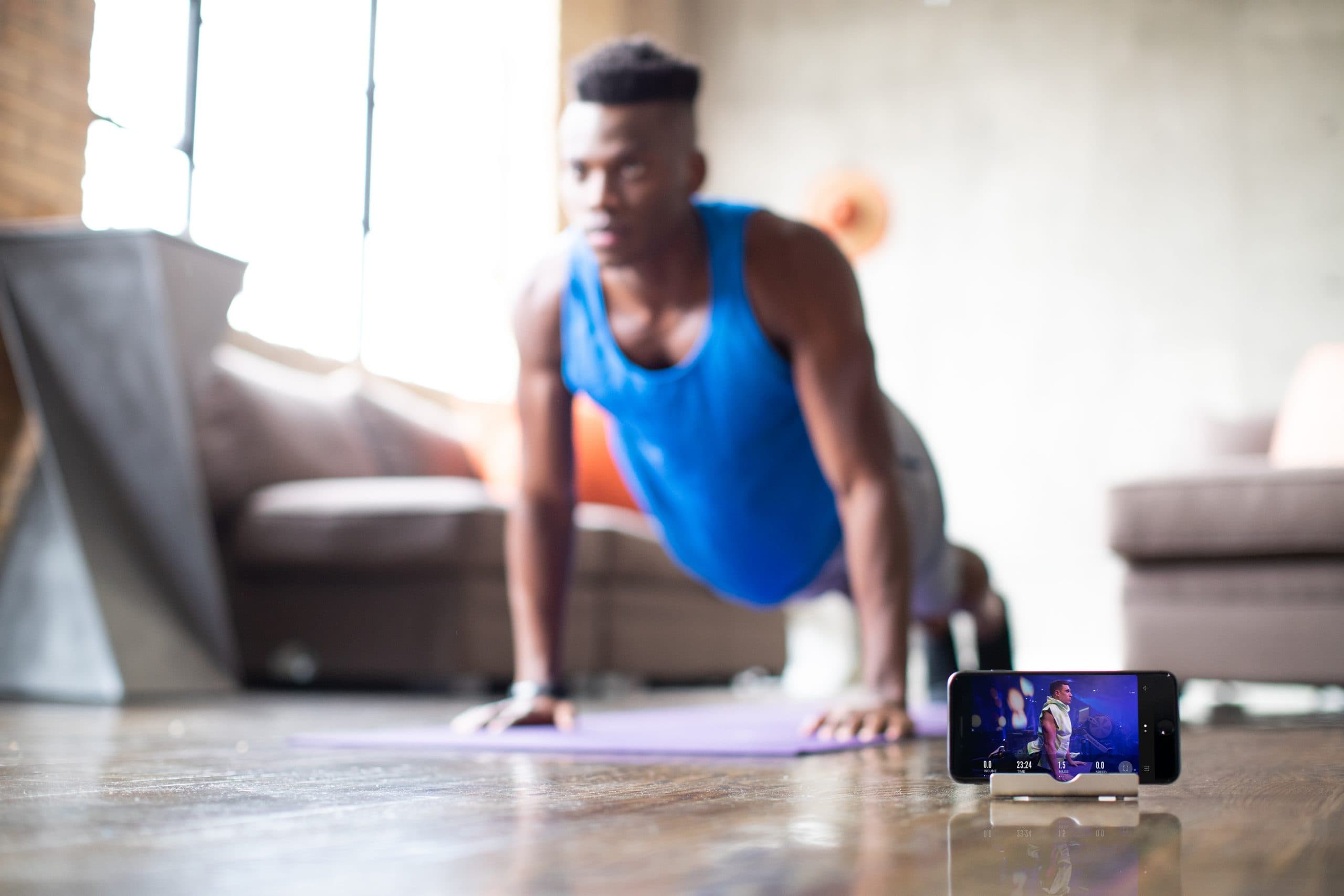
Getting Started Off Your Equipment
The iFIT app offers a variety of workout series for every piece of equipment: skiing in Colorado on the elliptical, hiking or running in Hawaii on the treadmill, cycling in Turkey on the bike, rowing across the English Channel, and much more. For those seeking an equipment-free workout experience, there are several activities that can be accomplished without iFIT-enabled equipment! Best of all, these workouts give you the freedom to venture elsewhere, whether that's across the world or into a different room. Here's how to get started off of your equipment with the iFIT app: Strength training If you want to tone your body or build some strength, then you can focus on high-intensity interval training (HIIT) or strength circuits that can be divided between upper-body, lower-body, full-body, or core workouts—depending on your interests and goals. You'll learn the fundamentals of lifting while getting in a good burn. If you’d like to give it a try, bring your mat and dumbbells and follow iFIT Trainer Kelsey Sheahan in her Foundations of Strength Training Series! Yoga and active recovery Taking days to recover is crucial to preventing injury and keeping your body healthy. There are many series on the iFIT app that teach you how to stretch and mobilize certain muscle groups and also enhance your flexibility and mind. Try dedicating 5–10 minutes to recover with stretches after running or strength training. You can try out the Mindful Stretching Series with iFIT Trainer Nicole Meline. You can also spend recovery days in Asia with iFIT Trainer Briohny Smyth in her Thailand Yoga & Strength Series. Audio Workouts These listening-only workouts allow you to focus on your surroundings instead of the screen. With a mix between endurance runs and intervals, mindful workouts, and strength training, there are endless options for you to get your activity in throughout the day. Try the Intro to Endurance Jogging Outdoor Series through the city with iFIT Trainer Casey Gilbert or meditate on a summit with iFIT Guide Kevin Courtney in his Strengthen the Mind Meditation Outdoor Series. Mindfulness and mental health Strengthening your mind is just as important as strengthening your body. The iFIT app offers a variety of mindful workouts, such as meditation and mental training. You can learn about topics like finding happiness, overcoming personal challenges, and how to get better sleep. Practicing mindfulness has been shown to offer several health benefits that can have a long-lasting, positive impact on your life. If you haven't already, zen out with iFIT Trainer Nicole Meline in her Montana Meditation Series. At iFIT, improving your health and wellness is our goal, so we’re always releasing new workout series for you to try—both on and off your equipment! Disclaimer: This blog post is not intended to replace the advice of a medical professional. The above information should not be used to diagnose, treat, or prevent any disease or medical condition. Please consult your doctor before making any changes to your diet, sleep methods, daily activity, or fitness routine. iFIT assumes no responsibility for any personal injury or damage sustained by any recommendations, opinions, or advice given in this article. Always follow the safety precautions included in the owner’s manual of your fitness equipment.
December 16, 2020
Read More
iFit Workouts to Strengthen Your Mind
World Mental Health Day is observed on October 10 each year. This globally recognized day is focused on raising awareness of mental health issues around the world and mobilizing efforts in support of mental health. Research shows that exercise may have a positive effect on your overall mental health. We all know the feeling of pride and accomplishment after completing a workout, but focusing specifically on your mental health is another way to improve your overall well-being. At iFit, we know that a strong mind is just as important as a strong body. That’s why we have introduced several series that are focused on mental health to help you strengthen your mind through motivational messages, meditation practices, and even a series focused on quality, restful sleep. Here are some of the wellness series available in the iFit Library: In this series, you’ll walk with sports psychologist and iFit Guide Dr. Jarrod Spencer. He’ll explain the mental health issues athletes often struggle with, like anxiety, depression, anger, confidence, vision, hurdles, and energy. He’ll provide you with tools to conquer these issues, along with stories of famous athletes, including Tiger Woods, Serena Williams, Stephen Curry, and Landon Donovan. Join this Series In this audio series, iFit Guide Kevin Courtney will guide you through basic practices of meditation that are intended to generate a calm and stable mind. As the series progresses, Kevin introduces more advanced techniques to enhance focus, cultivate awareness, and ultimately help you find your way to a bright, luminous mind. Join this Series This unique series with iFit Guide Jason Stephenson will help you slow down at the end of the day and peacefully transition to healing rest. He will help you overcome loud subconscious thoughts, calm your mind, and enter a deep state of tranquility. Join this Series iFit Guide Dr. Shauna Shapiro will lead you through six mindful walks, teaching you science-based practices of mindfulness and self-compassion. Her goal is to rewire your brain to bring about lasting change that can help transform your life. You'll learn specific practices to help you improve your sleep, increase your body positivity and self-esteem, and cultivate greater coping tools to manage your stress. Join this Series We hope you’ll join our iFit Guides for these unique, enlightening series, focused on your mental health and well-being.
October 20, 2020
Read More
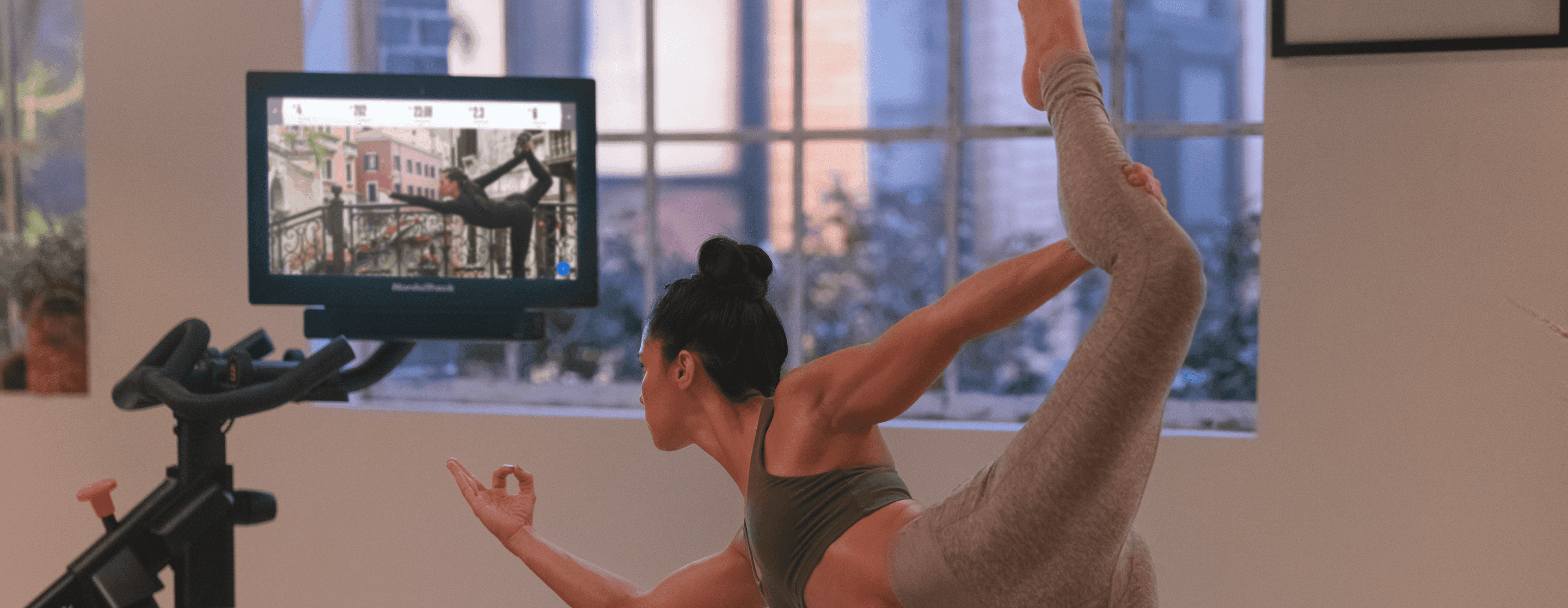
The Benefits of Practicing Mindfulness During Your Workouts
Fitness enthusiasts focus on bettering themselves by staying active, whether that is running to lose weight, lifting to build muscle strength, conditioning to advance athletic skills, etc. Another great way to stay active is by practicing mindfulness. This includes activities such as yoga, meditation, and stretching. With full-time work schedules, workout routines, social lives, and all other responsibilities, the average person only really gets to relax for about 43 minutes a day. By being able to incorporate mindful activities into your workout routine, not only will you improve your physical health and abilities, but you will also see an improvement in your psychological health. According to the American Institute of Stress, 77 percent of people suffer from physical health issues, and 73 percent suffer from mental health issues, due to stress. Physical problems, such as headaches, high blood pressure, and muscle tension or pain can stem from stress and decrease your desire to exercise. In addition, high levels of stress can lead to anxiety and depression. By making time for active recovery, both your body and mind will be significantly healthier. To start becoming more mindful, join iFit’s Mindfulness & Self-Compassion Series with iFit Guide Dr. Shauna Shapiro, who will provide tips on how to sleep better, manage stress, and stay positive! Practicing meditation is the best way to calm the mind and bring your awareness fully into the present. Try iFit’s audio Strengthen the Mind Meditation Series with iFit Guide Kevin Courtney for more tips on how to start. Meditation can reduce feelings of negativity, like anger and sadness. As a fitness advocate, you can also benefit from an improvement in focus and an increase in motivation! You can start with as little as one minute of practice daily, and the long-term benefits make it worthwhile. Having a healthier mindset will boost your immune system, increase your pain tolerance, and decrease your chances of developing cardiovascular disease. You can also participate in physical activity during meditation when doing yoga. Yoga is a combination of physical postures, breathing control, and mindful-based meditation. The practice not only brings your mind into full consciousness, which can decrease mental health issues, like panic disorder, it also improves flexibility and mobility, enhances strength, and betters heart and lung function. The constant stretching allows your body to become more elastic, which can decrease your overall pain level. You can practice yoga in places such as the studio, your backyard, at the summit of a mountain, or even at the beach! To start your yoga journey, try iFit’s Heartward Yoga Series to get started! Yoga is an active way to stretch out your muscles, which is important to do after any workout. Taking time to stretch reduces your risk of injury, as well as improving your performance and the range of motion of your joints. You know you have a solid lower-body workout when you can barely walk afterward, but it is crucial to spend 5 to 10 minutes to stretch and relieve your sore muscles. To improve your mind, body, and soul, participate in iFit’s September Challenge, which includes a mix of audio workouts to get you started on your journey to mindfulness!
September 9, 2020
Read More

Join the September Challenge!
The September Challenge is here! We’re changing things up a little this month, and we’re excited for you to get in on the action. This month is all about our audio workouts! We’re challenging you to complete one of five audio series in the iFit app. You'll have from September 8–30 to choose your audio series and conquer this challenge! Choose from the following series: Heartward Yoga Series with Nicole Meline Intro to Endurance Jogging Outdoor Series with Phil Catudal Power Walking Interval Outdoor Series with Nicky Holender Outdoor HIIT Strength Series with Kelsey Sheahan Strengthen The Mind Meditation Series with Kevin Courtney Simply choose the series that interests you the most, then complete all SIX workouts to receive your magnet in the mail! If you want, you can participate in all five series, but you’ll only receive a reward for completing one of them. Grab your headphones and make sure you’ve downloaded the iFit app to your phone, then log in to your iFit account. Remember, you can complete these workouts outside, at home, or on your equipment (you’ll just need to adjust your machine's settings manually). Our trainers will give you audio cues every step of the way. You've got this!
September 8, 2020
Read More
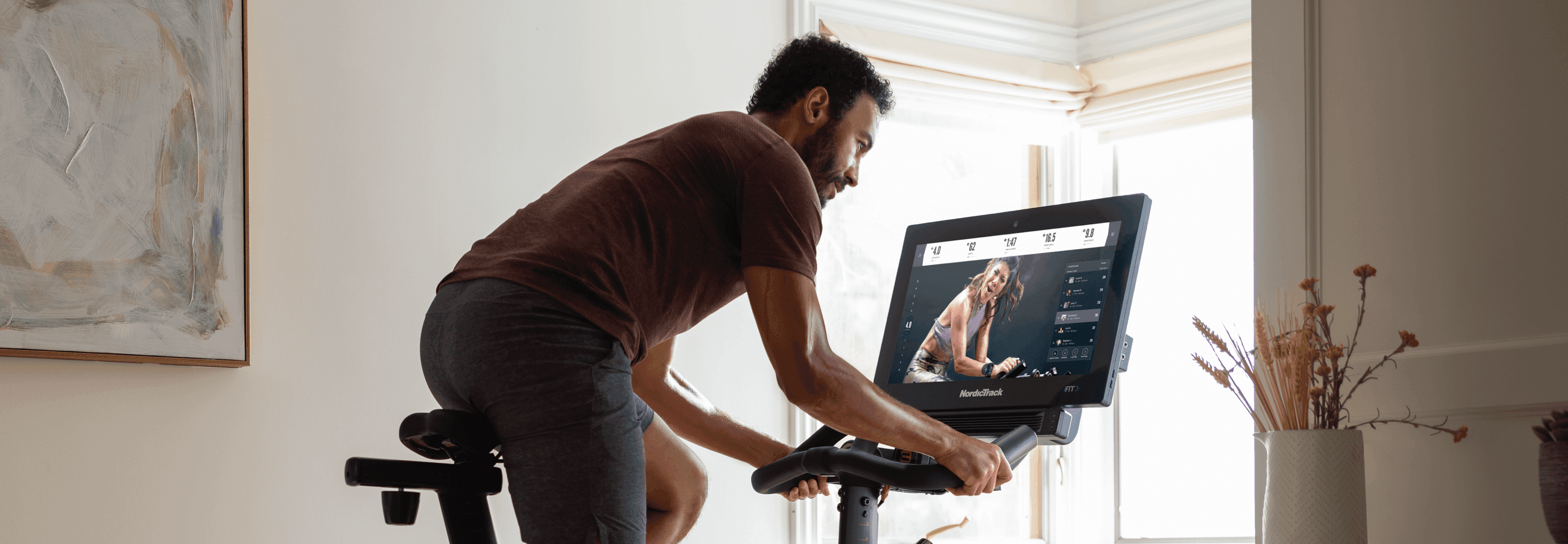
Guide to Getting Started with iFIT: Part 2
Whether you’re new to iFIT or just looking to explore its features, we compiled some of our most frequently asked questions and favorite features for you. Think of this as your guide to all things iFIT as you chase your fitness goals and make the most of your membership! Looking for more information on how to get the most out of your iFIT membership? You can also check out Part 1 of our Guide to Getting Started with iFIT. Scheduling a workout Did you find the perfect workout, but you aren’t ready to complete it right now? You can schedule any workout for a later date, so your workout is ready whenever you are! There are a variety of ways you can schedule a workout: on your equipment, smartphone, or tablet, or on iFIT.com. Machine Make sure you’re logged in to your iFIT account on your equipment.Tap the “Browse” icon to find a workout.Once you find your workout, tap on it to view details.At the top of the details box, tap “Schedule”.Once you tap the icon, a calendar will appear.Select the date by clicking on it.A dialog box will appear, confirming your workout has been scheduled.The workout will appear on your equipment or in the iFIT app on the day you selected. Smartphone or tablet Open the iFIT app.Tap the “Browse” icon in the bottom navigation to locate a workout.Tap the magnifying glass at the top of your screen to search for a workout.Tap on the workout you’d like to schedule.In the workout, tap the calendar icon in the upper, right-hand corner of your screen.Once you tap the icon, a calendar will appear.Select the date by clicking on it.A dialog box will appear, confirming your workout has been scheduled.The class will appear on your equipment or in the iFIT app on the day you selected. iFIT.com Make sure you are logged into your iFIT account.Find your workout by hovering over the Menu tab at the top and clicking on “Library.”Click into the details of your workout.Click the blue, “Schedule Workout” button.Once you click the button, a calendar will appear.Select the date by clicking on it.A dialog box will appear, confirming your workout has been scheduled.The workout will appear on your equipment or in the iFIT app on the day you selected. For information on how to join a workout series, read Part 1 of the Guide to Getting Started with iFIT. Setting your workout preferences When you sign up for a workout series, the workouts will automatically load on your account. They can be accessed from your machine, tablet, or smartphone on the scheduled day. Did you know that you can decide which days you’d like to schedule workouts in the series? You can update your workout preferences right in your account. Here’s how to access this information: Go to iFIT.com/login.Enter the email address and password for your account.Hover your mouse over your name in the top, right-hand corner of the screen.In the drop-down menu, click on “Settings.”In the left column, under “Preferences,” click on “Workouts.”Check or uncheck the days of the week you’d like to schedule workouts.You can also update your preferences for missed workouts.Use the drop-down menu to select “Reschedule” or “Skip” missed workouts.Reschedule will simply push the missed workout to the next day.Skip will skip the missed workout entirely. Adding secondary users to your account If you have an iFIT Family membership, you can add up to 4 secondary users to your account. Here’s how to add secondary users: Go to iFIT.com/login.Enter the email address and password for your account.Hover your mouse over your name in the top, right-hand corner of the screen.In the drop-down menu, click on “Settings.”In the left column, click on “Membership Plan.”Click the blue plus sign to add secondary users.On the next screen, click the blue plus sign to send and invite users.Simply enter the user’s email address, then click “Send.”An invitation will be emailed to your secondary users to create their iFIT account. Getting to know the Dashboard on your machine When it comes to using your iFIT-enabled equipment, think of your machine’s Dashboard as “command central.” Once you log in to your account, the Dashboard will populate with your scheduled workouts, suggestions for workouts based on your recent activity, and it also allows you to explore new workouts. The Dashboard lets you search for workouts using criteria like trainer, workout type, and even workout length. You can browse the Library to find your next workout, join a series, and even join a Live Event. If you have signed up for a workout series, the next scheduled workout will appear first on the screen, so you can pick up right where you left off. It will also populate with other workouts you might like, based on your recent activity, so you can try something new! Have any questions about iFIT or want more pointers to make the most of your membership? You can ask us on social media via our Facebook group or on Instagram. Disclaimer: This blog post is not intended to replace the advice of a medical professional. The above information should not be used to diagnose, treat, or prevent any disease or medical condition. Please consult your doctor before making any changes to your diet, sleep methods, daily activity, or fitness routine. iFIT assumes no responsibility for any personal injury or damage sustained by any recommendations, opinions, or advice given in this article. Always follow the safety precautions included in the owner’s manual of your fitness equipment.
July 21, 2020
Read More
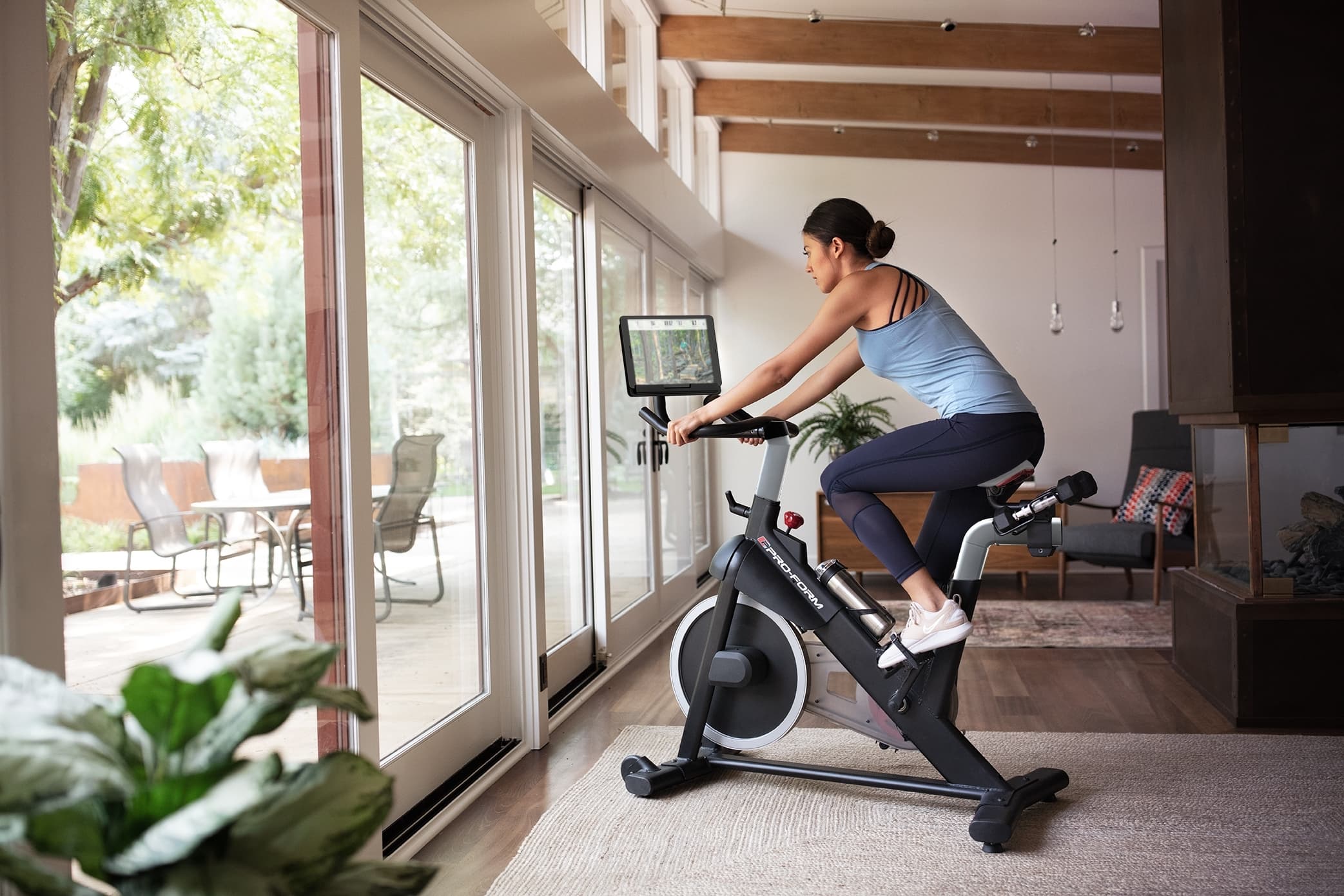
Tips and Tricks for Getting Started on Your iFIT-Enabled Bike
Cycling is an incredible cardio workout that can have a lower impact on your joints. With iFIT, you have access to thousands of workouts, including stretching, strength training, and yoga to really make the most of your cycling experience. As you get going on your workout journey, here are some tips to help you become familiar with your bike. Getting to know your bike During your workout, your trainer will automatically adjust the incline, decline, and resistance on your bike for you. This hands-free experience helps you focus on your workout, rather than fussing with controls. However, if you want to make the workout easier or more difficult, you can override the trainer’s controls and adjust to your needs. All of our bikes are made with an emergency stop button that can be pressed at any time to halt the bike completely. Most bikes come with 3-pound hand weights that sit on the bike, so they can be easily accessed for cross-training or bootcamp workouts. Most bikes are also equipped with a built-in fan to help keep you cool during a long ride, as well as cupholders for your water to help you stay hydrated. Adjusting the seat and handlebars When it comes to good cycling form, it starts with the seat of your bike. Ensuring that your seat is at the proper height will keep your entire body in alignment when you ride. Here’s how to find your ideal seat height: Stand beside your bike.Raise the leg closest to the bike, so your knee is bent at a 90-degree angle, and your thigh is parallel to the floor.The height of your hip joint is where the top of your seat should be set.Raise or lower your seat to your ideal height by loosening the knob located behind the seat.Check the number listed on the bar underneath the bike to remember your seat position. Want to double-check your form? Set your bike at the proper height, then sit on the saddle and place your feet in the cages. Slowly pedal your feet. In the downward stroke position, your leg should be completely straight. If there is still a bend in your leg, adjust your bike accordingly. The handlebars on your bike should be the same height as your seat or even slightly higher. This ensures that you are riding in a more upright position. Keeping your handlebars above your seat helps take the pressure off of your back, neck, arms, and wrists. Find your workout Now that your bike is perfectly aligned to your body, it’s time to tackle a cycling workout! There are thousands of classes available in the iFIT Library. You can filter by: Duration (20–30 mins, 30–40 mins, etc.)Trainer (John Peel, Tommy Rivs Puzey, Hannah Eden, etc.)Category (Running, Walking, Recovery, etc.)Intensity (Level 1–7)Target area (Back, Chest, Arms, Shoulders, etc.) Continent (North America, South America, Europe, etc.)Environment type (Forest, Beach, Mountains, Studio, etc.) Cycling Series Not sure where to begin? All iFIT workouts are rated by intensity, which helps you locate the best class for your desired intensity level and individual goals. You can view workouts by intensity here: Beginner cycling seriesIntermediate cycling seriesAdvanced cycling seriesBeginner Flow chart You also have access to strength training, stretching, and yoga workouts on your bike. Want to work out off of your bike? Download the iFIT app onto your smartphone or tablet! If your bike doesn’t have a built-in console, you can join a workout using your smartphone or tablet, then attach it to your machine.Want more information on making the most of your iFIT membership? Check out our Getting Started Guide Part One! Disclaimer: This blog post is not intended to replace the advice of a medical professional. The above information should not be used to diagnose, treat, or prevent any disease or medical condition. Please consult your doctor before making any changes to your diet, sleep methods, daily activity, or fitness routine. iFIT assumes no responsibility for any personal injury or damage sustained by any recommendations, opinions, or advice given in this article. Always follow the safety precautions included in the owner’s manual of your fitness equipment.
July 20, 2020
Read More