Weight lifting
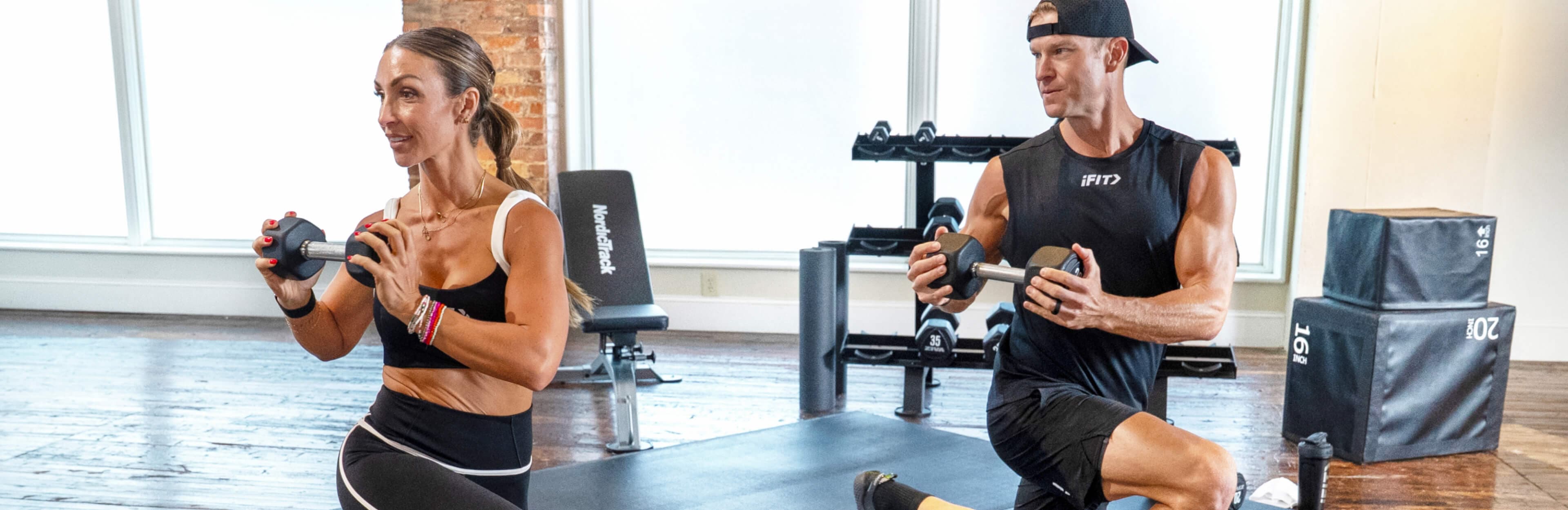
Transform 90: What It Is, What to Expect, and Why It Works
Transform 90 is a 13-week strength program with 79 coached workouts from iFIT Trainers Bree Cox and John Peel. Here is what to expect, who it is for, and how to get started.
October 13, 2026
Read More
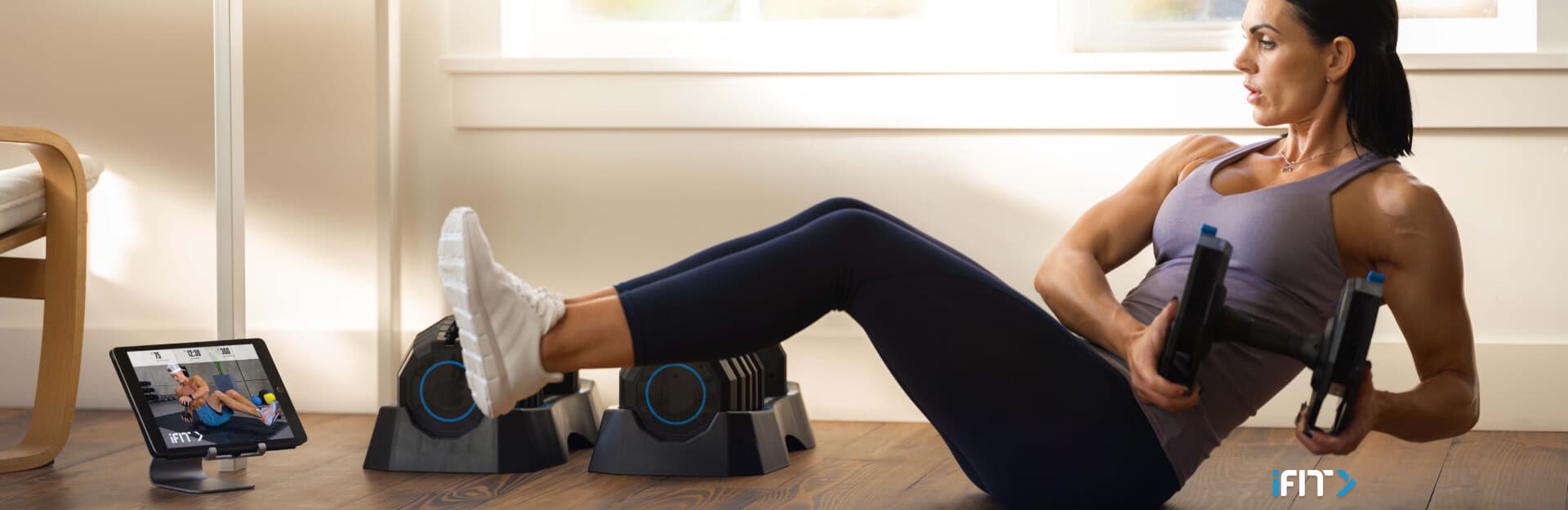
10 Exercises for Your Next Ab Workout
When it comes to bodyweight exercises, the abdominal muscles are often targeted for training. You don’t need sophisticated equipment to train the abs; bodyweight movements alone can build muscle and strength. However, just like with other muscle groups, specific workouts may stimulate the muscles better than others. In a study comparing 13 common abdominal exercises1, the American Council on Exercise (ACE) identified three ab workouts that stood out from the rest: bicycle crunches, captain’s chair crunches, and crunches performed on an exercise ball. These three core workouts targeted muscle stimulation in the rectus abdominis and obliques. These core exercises should not only strengthen your abdominal muscles, but they should benefit you in other ways too. Strong abdominals2 are crucial for injury prevention, good posture, athletic performance, and staving off lower back pain. Our top 10 picks for ab exercises To try and maximize your ab workout, knowing which muscles make up the abs3 is useful. While some exercises primarily stimulate the rectus abdominis (the front ab muscles), others call the obliques (internal and external) or the transverse abdominis into action. The external obliques are the muscles located on the sides of the rectus abdominis around the waist, whereas the internal obliques are positioned just below the rectus abdominis. The transverse abdominis is an internal stabilizer located on the lateral sides of the abdominal wall. Next time you want to train your abs, incorporate the first three core exercises mentioned below into your workout regimen. The only piece of equipment you’ll need is an exercise ball, which you can find at retail or specialty sports stores. You’ll leverage the power of bodyweight to help build your abdominals! Let’s walk through each of these movements step by step. 1. Bicycle crunches Since this ab exercise utilizes all of your abdominal muscles, ACE highlighted that bicycle crunches are fundamental for ab training. They help stimulate your abdominal muscles so you feel that burn and help improve your fitness. Lie down flat on your back. You can use a yoga mat for comfort during this exercise.Bring your knees to your chest and lift your shoulder blades off the floor.Straighten the left leg and simultaneously turn your upper body to the left. During this movement, bring your right elbow to the left knee. Breathe out as you turn your body.Repeat the process for the other side. 2. Captain’s chair crunches This core exercise4 requires a captain’s chair, a seatless chair with a back and armrests. Don’t be surprised when your obliques feel taxed after these crunches! Press your back against the backrest with your feet on the bottom supports and arms resting on the upper supports.Gripping the handles, lift your feet off the supports and allow your legs to hang straight down.Slowly breathe out as you lift your knees to your chest.Hold the lifted position for a few seconds, then slowly lower the legs back down into the starting position and repeat. 3. Exercise ball crunches Ranked the third most effective abdominal workout5, crunches performed on an exercise ball do a much better job of engaging your core than floor crunches. This exercise targets the abdominals and oblique muscles precisely. Lie back on an exercise ball with your hands behind your head or across your chest. Ensure your feet are stable on the floor.Lean your upper body back on the ball, then use your core to raise yourself forward (just as you would in a traditional crunch). Hold the crunch position for a few seconds, and then slowly lower yourself back down. Other effective ab exercises While the above ab exercises are highlighted by ACE, many others effectively engage your core! When paired with bicycle crunches, captain’s chair crunches, or exercise ball crunches, the following core exercises can offer the variety you need to keep your ab training interesting. 4. V-ups As a total-body movement, V-ups are incredibly powerful and challenging to master! In this core bodyweight exercise, you’re creating a “V” with your upper body and legs, engaging your core during the process. Lie on the floor with your legs extended straight out and your arms by your sides.Lift your legs, arms, and upper body up to where you’re balancing on your glutes. This position should resemble a “V.” Only your glutes should be on the floor.Reach your arms so that they’re parallel to your legs.Hold this position for 30–60 seconds.Lower back down and repeat. 5. Deadbugs Great for all of your abdominal muscles, deadbugs are a functional warmup for lower body workouts, but may also be incorporated as part of your core workout. The key to this movement is to keep your lower back flat on the floor. Lie down flat on your back. You can use a yoga mat for comfort during this exercise.Extend your arms straight up and bring the knees up toward your chest to create a 90-degree angle. Press your lower back into the floor. Focus on keeping it down without allowing it to buckle.Slowly extend your right leg out straight and your left arm overhead. Your heel and hand should almost touch the floor.Hold this position for a few seconds and then return to the starting position. Repeat this process with your left leg and right arm. 6. Planks A plank is a bread-and-butter movement for abs workouts. With bodyweight alone, planks6 are challenging, even to the most advanced fitness enthusiasts. Position yourself on your hands and knees. You can use a yoga mat for comfort during this exercise.Place your hands shoulder-width apart, directly under your shoulders. Your feet should be a bit wider than your hips but you can bring them closer together for a greater challenge.During the plank, keep your body straight, from your heels to your head. Look down at the floor to keep your spine neutral. Engage your core, quads, and glutes. Hold the plank position for however long feels comfortable. For example, beginners can aim for 10 seconds and increase the duration with practice. Do not let your hips or shoulders dip.Come out of the plank position and rest before trying again. 7. Side planks Side planks7 are a great addition to traditional planks, as they help strengthen the shoulders, hips, and obliques. Since you’re on your side in this core exercise, the obliques are doing some heavy lifting here. Lie on your side with your left forearm flat on the floor. Your elbow or hand should be under your shoulder and your legs extended. Your body should be in a straight line.Stagger your feet and engage your core. If this is too difficult, you can instead be positioned on the side of your knees.Slowly lift your hips off the floor and hold the position. You can extend your right arm or keep it immobile.Hold the plank for however long feels comfortable, then lower back down. Repeat this movement on the other side. 8. Heel taps If you’re looking for core exercises that integrate your hip flexors, heel taps are a worthwhile addition to your ab routine. Once you get going with these, you’ll feel your obliques working hard! Lie down flat on your back. You can use a yoga mat for comfort during this exercise.Position your feet on the ground, heels close to your glutes.Engage your core, then lift your shoulder blades off the floor.Reach down to touch your left heel with your left hand and vice versa. 9. Reverse crunches If you don’t have access to a captain’s chair, reverse crunches provide a similar movement. Instead of hanging, you’ll lie on your back without placing strain on your back or neck. Lie down flat on your back. You can use a yoga mat for comfort during this exercise.Lift your legs so that your knees are slightly bent.Press your lower back into the floor and place your hands at your sides.Slowly bring your knees up towards your chest. This will lift your hips off the floor. Keep the lower back pressed down.With control, lower your legs back down, but not all the way to the floor. 10. Hollow holds When performed correctly, hollow holds will strengthen your abs. The contraction of your ab muscles is part of what powers this movement, so it’s important to first nail the form down on these, as is the case with the other exercises. Lie down flat on your back. You can use a yoga mat for comfort during this exercise.Press your lower back firmly into the floor.With the hands placed at your sides, raise your legs about one to two inches off the floor. Ensure the lower back does not buckle.Lift your shoulder blades one inch off the floor. Again, keep the lower back pressed firmly into the floor.Hold this position for a few seconds and then relax. Try an iFIT ab workout When paired with a healthy diet, these ab exercises can help you build stronger abdominal muscles. As you work on your core, you’ll better understand which muscles you’re utilizing in these movements. Plus, our iFIT Trainers are here to help you strengthen your core! The above ab exercises are ideal for a challenging home workout. Although they only require your bodyweight, you’ll find that they offer a range of physical and mental benefits. Depending on which exercises you choose to do, you can easily knock out a 10 minute ab workout in the morning, on your lunch break, or in the evening after work. Once you’re ready to take your ab training to the next level, your iFIT Trainers will be waiting for you! With dozens of bodyweight workouts available in our Library, you’ll have access to a variety of challenging, trainer-led ab workouts that incorporate many of the above exercises. When you download the iFIT fitness app, you’ll have access to ab workouts that will keep your everyday fitness routine exciting. References 1. American Council on Exercise. (2001, May 14). American council on exercise (ace)-sponsored study reveals best and worst abdominal exercises. ACE Fitness. https://www.acefitness.org/about-ace/press-room/press-releases/246/american-council-on-exercise-ace-sponsored-study-reveals-best-and-worst-abdominal-exercises/. 2. Waehner, P. (2020, December 7). Strong abs are more important than flat ones. Verywell Fit. https://www.verywellfit.com/strengthen-your-abs-beyond-the-six-back-1229504. 3. Quinn, E. (2021, July 12). Abdominal muscles location and function. Verywell Fit. https://www.verywellfit.com/abdominal-muscles-anatomy-3120072. 4. Ritschel, C. (2018, August 12). The 3 most effective ab workouts, according to experts. Business Insider. https://www.businessinsider.com/the-3-most-effective-ab-workouts-according-to-experts-2018-8. 5. McGuire, J. (2019, March 5). The ab exercises you shouldn't be doing, according to research. Runner's World. https://www.runnersworld.com/uk/news/a776336/best-and-worst-abdominal-exercises-according-to-research/. 6. Goldman, A., & Mateo, A. (2019, September 6). How to do a perfect plank: your guide to mastering the abs exercise. Women's Health. https://www.womenshealthmag.com/fitness/a19983224/plank-exercise/. 7. Yetman, D. (2020, November 10). The Benefits of a side plank and how to do it safely. Healthline. https://www.healthline.com/health/side-plank#benefits. 7. Yetman, D. (2020, November 10). The Benefits of a side plank and how to do it safely. Healthline. https://www.healthline.com/health/side-plank#benefits. Disclaimer: This blog post is not intended to replace the advice of a medical professional. The above information should not be used to diagnose, treat, or prevent any disease or medical condition. Please consult your doctor before making any changes to your diet, sleep methods, daily activity, or fitness routine. iFIT assumes no responsibility for any personal injury or damage sustained by any recommendations, opinions, or advice given in this article. Always follow the safety precautions included in the owner’s manual of your fitness equipment.
September 7, 2021
Read More
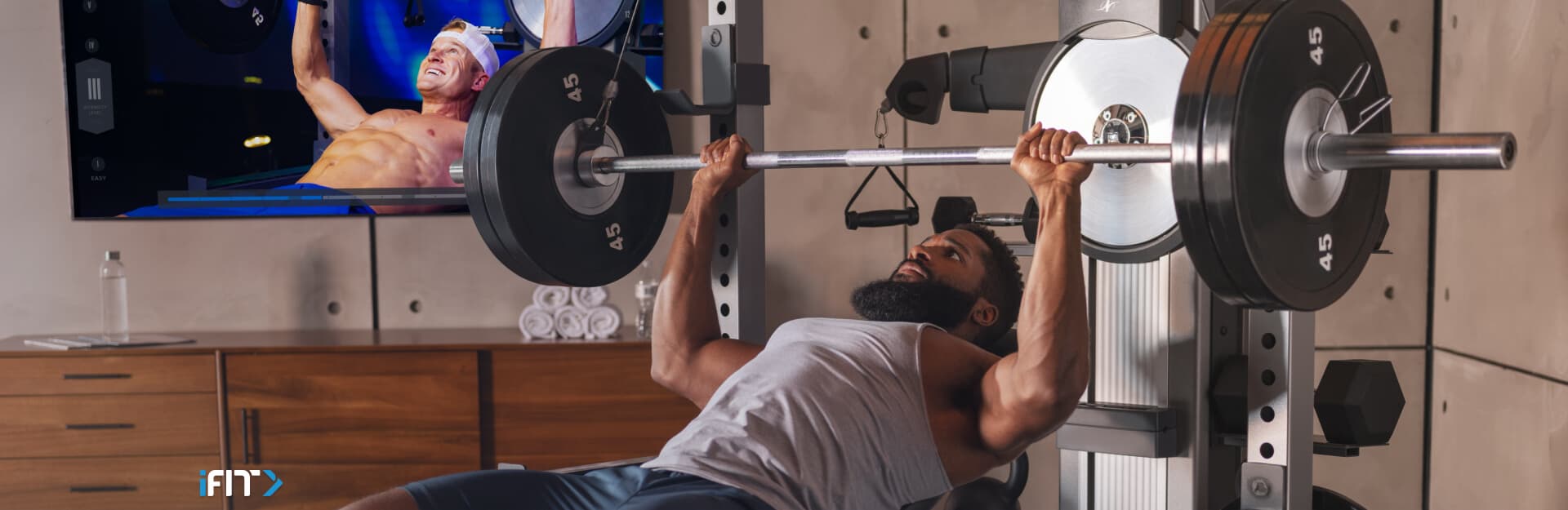
Top At-Home Chest Workouts for Men
A balanced and strong body is crucial for conquering both everyday tasks and athletic feats. Whether you’re training to run your first marathon, racing family members down the mountain on a ski vacation, or picking up your toddler from the floor during a temper tantrum, your body’s strength is being tested. Focusing on a home workout that includes both cardio and strength training sets you ahead of the curve. According to the Centers for Disease Control and Prevention (CDC), “only 21.9% of men and 17.5% of women (age adjusted) in 2004 reported strength training two or more times per week.” If you do lift weights regularly, it’s important to analyze the strength exercises you perform and the specific muscles they target. After careful consideration, you may begin to identify some gaps in your fitness regimen. Often, chest exercises are left behind, even in the most regimented workouts. Addressing these gaps to achieve an all-encompassing home workout makes all the difference when tackling daily activities and athletic challenges. Men are more likely to include chest exercises in their fitness routine. They may be more focused on bulking up muscles in this area of the body. While some women may not be as interested in bulking up, their bodies can also benefit from adding chest workouts to strength training days. Chest muscles are crucial to your structural balance and strength. When you develop a comprehensive routine in your home gym that includes effective chest exercises, you’re likely to improve strength and see results. To ensure your chest muscles are getting the work they need, review the muscles you should consider targeting. Learn why these chest muscles are so important. Take a look at the following simple exercises to add to your home workouts that will help you build chest strength. What muscles will your chest workouts target? Men are likely to include chest classes in their routine to enjoy the physical results. Not only do chest muscles complement a chiseled physique, but they’re also crucial to your body’s functionality, strength, and balance. These muscles help you breathe, lift, and move. They’re also vital to improving your posture and preventing back or neck pain. When you incorporate a challenging chest workout into your fitness regimen, you’ll perform exercises to strengthen and tone several different muscles. 1. The pectoralis major and minor The most well-known chest muscles are the two primary muscles, the pectoralis major and pectoralis minor. Together, they’re commonly referred to as “pecs.” The pectoralis major is located under the breastplate. The pectoralis minor can be found in the upper part of the chest. These muscles fire up any time your body requests to move your arms. This includes rotational, lateral, and vertical movement. When you lift or lower something, such as a child or a bag of groceries, your pecs activate. They take on the weight and ensure your body remains stable as you lift and lower. Your pectoral muscles are also crucial throughout the breathing process, specifically during inhalation. Your body calls on these muscles to hold up your head and neck. Strong pecs ensure you continue to maintain a healthy posture, even if you’re looking at your phone or using a keyboard for hours at a time. 2. The sternocostal head and clavicular head The sternocostal head and clavicular head are two other muscles in your chest area that assist with functionality. The sternocostal head attaches to your sternum and ribs. This muscle allows for extension when your arm is flexed. It helps lift your arm at the shoulder joint through adduction, allowing you to move it toward your midline. The clavicular head is attached to your clavicle and skull, incorporating your upper chest muscles. It allows for flexion when your arm is extended. This muscle also helps to rotate and support your neck and head. Every time you nod your head “yes” or shake your head “no,” you’re engaging your clavicular head muscle. 3. The serratus anterior muscles The serratus anterior muscles are located between your clavicle and first rib. These chest muscles help to protract and retract your scapula. This movement is most synonymous with throwing and retracting a solid punch in the boxing ring. When your serratus anterior muscles are engaged, they allow for anteversion and protraction of your arm. These muscles also work together with other parts of your body to help lift weight over your head. Healthy and productive breathing is also attributed to strong serratus anterior muscles. These muscles gently lift the ribs, so your lungs can fill with air during the respiration process. A comprehensive chest workout should challenge all of the muscles in your chest, not just your pecs. Incorporate well-rounded chest exercises into your routine to ensure your body is functioning at peak level. Which chest exercises should you add to your home workout? There are many types of chest exercises that target different muscles. Here are a few simple exercises you can add into your routine to help improve your strength and fitness. When starting your home gym workout, begin with light weight (or no weight) and fewer reps. Then, slowly and safely increase weight and repetitions. Always focus on proper form. 1. Bench press A bench press may seem intimidating, but this chest exercise is simply a chest press. You perform it with a barbell instead of dumbbells, while laying on a bench instead of a mat. While a barbell bench press is one of the most effective chest exercises, you may not have a barbell or bench handy. In this case, you can still work your chest muscles through a chest press instead. A personal trainer may recommend a bench press to help male clients add muscle mass in the chest area. Even with light barbell weight, enlist a spotter when performing this chest exercise to ensure you stay safe. As your chest muscles strengthen and you become comfortable with the form, you can begin to increase the weight you press. In addition to strengthening your chest muscles, you may also see improvements in your tricep and trunk muscles if you consistently add bench presses to your routine. 2. Push-ups No equipment? No problem. You can still get an effective strength training workout for your chest in your home gym with push-ups. Find a comfortable surface and perform push-ups on your toes and hands. You may also scale it down to your hands and knees to start. If you’re just starting out, try push-ups while standing, with your hands against a wall. You can also use an elevated surface, such as a bench or stairs, to modify this exercise. Many fitness enthusiasts assume that bodyweight-only exercises are easier. However, push-ups can be challenging. You should begin to feel the effects of this tough exercise right away. In addition to strengthening your chest muscles, push-ups also tackle your core, shoulders, and triceps. To keep up your motivation, challenge yourself to increase the number of reps you perform with each workout session. 3. Chest fly You don’t need expensive gym equipment for this chest exercise, which mainly focuses on strengthening the pecs. You can try a chest fly in your home gym with just a mat and dumbbells. Laying on your back, hold the dumbbells in your hands, with your arms extended straight over your chest. Keeping your arms slightly bent, move them out to their respective sides slowly and simultaneously. Then, bring them back to the starting position and repeat. Press your back to the mat and engage your core throughout the movement. Not only will you feel this exercise working your chest muscles, but your back and triceps will feel the burn as well. The chest fly is a challenging chest exercise, so start with light dumbbells. If you don’t have dumbbells, water bottles or soup cans may do the trick as you begin to build strength. If you plan to increase your weight, keep an eye on your form to ensure safety and avoid injuries. Asking a friend, personal trainer, or family member to spot you during this chest exercise will keep your form in check. Why should you add chest exercises to your fitness routine? There are many benefits to chest workouts. Adding these exercises to a balanced home workout is bound to improve your overall fitness. Your upper body’s ability to move and function properly relies on the strength of your chest muscles. These muscles also help with breathing, posture, and other vital functions. Keeping your chest muscles strong with home workouts that incorporate chest exercises is the best way to build strength and improve fitness. Here are just a few important reasons you should consider adding a chest exercise or two to your upper body workout regimen. 1. Lifting is easier Carrying around a toddler, hauling suitcases through the airport, pushing a full shopping cart, or carrying groceries up two flights of stairs are basic tasks that require strength. It may seem like your body calls on strength solely from your biceps or back for lifting. However, your chest muscles are also crucial for efficiency and stability. Whenever you need to push, pull, or lift something, your body relies on your chest muscles (more specifically, your pecs) to help perform the motion. When your chest muscles are strong and capable, they have no trouble engaging. They take on the weight of the item, child, pet, or dumbbell on their own. With strength, your chest muscles don’t recruit other neighboring muscles to help, such as your neck or back. This prevents injury, pain, or imbalance in other areas of your body. 2. Your posture improves Bad posture and habitual slouching are not only bad habits but also dangerous to your health. When you maintain bad posture throughout the day, your diaphragm is constricted. This doesn’t allow you to breathe properly. Poor posture over an extended period of time may also lead to digestion issues, neck pain, or back pain. It’s a common assumption that good posture is solely dependent on the strength of the core. Strong core muscles are helpful for good posture and healthy movement. Your chest muscles also come into play as you attempt to keep your spine tall and straight. Your pectoral muscles are connected to your shoulders. They’re useful when you pull your shoulders back to sit or stand up straight. With strong chest muscles, it’s easier to maintain proper posture. By actively incorporating a chest class into your fitness schedule, you’re strengthening the muscles necessary to achieve proper posture. This allows you to avoid a wealth of potentially harmful side effects associated with long-term slouching. 3. Your breathing improves With good posture comes proper respiratory function. If your body stays in a tall and lengthened position, your internal organs have the space they need to suitably do their job. Not only do chest muscles help with proper posture, but they’re also a vital component in the inhalation process. These muscles are recruited when you take a deep breath because they assist in the slight expansion of your ribcage. This expansion allows your lungs to take in more air. You’re treated to a deep and luxurious breath, which is desperately needed if you’re stressed or overexerting yourself physically. 4. Your other muscles get stronger Even if you’re focusing on a chest workout, there aren’t many chest exercises that specifically isolate the pecs or clavicular head. Whether you hit the mat for a few push-ups or lay down for a bench press, your body is likely incorporating other muscles to perform the exercise. Most chest workouts inadvertently work your biceps, triceps, shoulders, or other surrounding muscles. In some cases, your abdominal muscles or leg muscles may also be activated along with the chest muscles you’re targeting. Depending on the chest exercise you’re performing, you may also strengthen your back muscles, helping with posture and overall fitness. When you add some chest classes to your fitness routine, you’re also improving the strength of other surrounding muscles simultaneously. You’re getting more bang for your buck! 5. Your muscle definition increases Perhaps one of the most common reasons that men tackle chest workouts is to improve their physique. Chest workouts have several health benefits, including improved posture and decreased risk for neck or back injury. When you include chest exercises in your workout, you’re also likely to notice a difference in your appearance. As these chest muscles build, their definition becomes more noticeable. Chest exercises are also likely to build surrounding muscles. This improves muscle tone and definition in your entire upper body. With improved posture and increased sculpting, you’re bound to look (and feel) more fit and strong. Try an iFIT chest workout today Ready to add some chest workouts into your fitness routine? Your chest muscles are crucial to your body’s strength, functionality, and health. There are countless chest workouts on the iFIT fitness app. These workouts are dedicated to helping you build muscle and increase strength. First, sign up for an iFIT account to gain access to thousands of at-home workouts in the iFIT Library! Still working on expanding your home gym but want to add in chest classes? Start with a bodyweight-only strength program! Meet your personal iFIT Trainer Zac Marion on the mat for the Beginner Bodyweight Strength Series. In these six strength workouts, you’ll focus on body burn and building muscle. If you have dumbbells and you’re ready to lift, join iFIT Trainer Gideon Akande for the Strength Training 101 Series. Throughout these 15 beginner home workouts, Gideon will teach you proper form. He’ll slow down exercises and focus on each movement. You’ll be a weightlifting pro by the end of the series! Tackle the Next-Level Strength Training Series with iFIT Trainer John Peel if you already feel confident in your strength training form. Over the next 12 weeks of intermediate strength workouts, you’ll increase strength and improve fitness. Throughout these 42 weightlifting classes, you’ll incorporate a variety of home gym equipment. You may use dumbbells, kettlebells, resistance bands, or loop bands while fine-tuning your chest exercise forms. Disclaimer: This blog post is not intended to replace the advice of a medical professional. The above information should not be used to diagnose, treat, or prevent any disease or medical condition. Please consult your doctor before making any changes to your diet, sleep methods, daily activity, or fitness routine. iFIT assumes no responsibility for any personal injury or damage sustained by any recommendations, opinions, or advice given in this article. Always follow the safety precautions included in the owner’s manual of your fitness equipment.
July 30, 2021
Read More
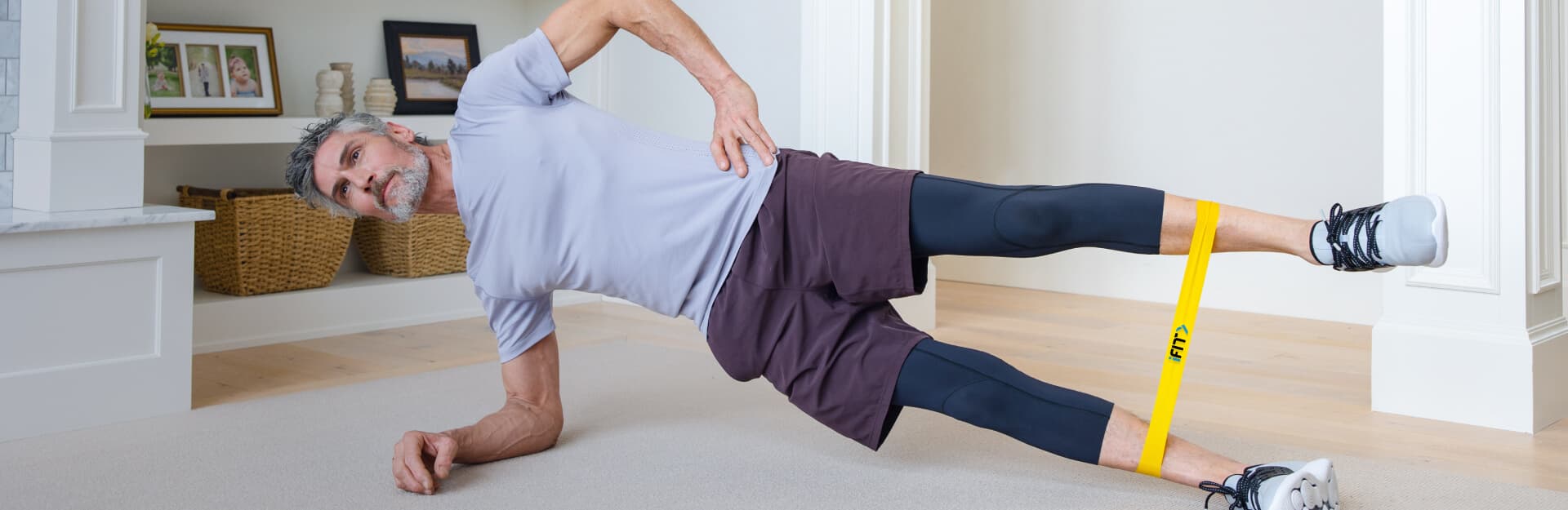
What Are the Best Lower Body Exercises?
As we age, mobility becomes something to take into consideration. Issues arise in the form of joint pain, arthritis, osteoporosis, and muscular weakness. While we can’t prevent all of the effects of aging, the body can be kept strong and mobile longer through exercise. Every functional movement is powered by the lower body. Walking, bending down, running, descending stairs, sitting, and standing require lower body mobility. If you’ve never focused on building strength in your legs, now is the time to start! We’re highlighting the best, most effective lower body exercises, many of which you can try out right away. When you sign up for iFIT, you can easily join a lower body class that will empower you to keep showing up for yourself! Why is it important to build lower body strength? Bones can be strengthened through strength training and weight-bearing exercise. Does this mean you need to lift heavy weights? No! Strength can be built using light to moderate weight without putting too much pressure on the joints. Weight-bearing exercise is one of the best ways to keep the body strong, as it contributes to bone mineral density. When bone mineral density is reduced, older people (especially women) are more at risk for osteoporosis. Weight-bearing exercise can be as simple as walking and climbing stairs, or as challenging as running and jumping rope. With weight-bearing exercise, we’re looking for movements that demand the body to bear its weight. Walking and running seem simple enough, but there are many different moving parts to these types of movements. The entire lower body must work in sync to effectively put one foot in front of the other. When the quadricep muscles are weak, or the ankles feel unstable, walking or running can feel challenging. Over time, this could affect everyday mobility. This is why exercising the lower body is so important! Whether you enjoy using weights or prefer sticking to bodyweight, there are many different types of lower body exercises that will effectively strengthen your leg muscles, improve circulation, and facilitate healthier joints. When should I do lower body exercises? You might ask, “When is the right time to do lower body exercises—before or after aerobic exercise?” In a study examining “muscle activation and performance during lower- and upper-body resistance exercise workouts,” participants engaged in four trials in random order. For two of the trials, they exercised on elliptical machines for 30 minutes, followed by either bench press or back squat exercises. The other two trials were only bench press and back squat resistance training. At the close of the trials, the study concluded that “...to optimize the quality of a lower-body resistance-training workout, the workout should not be preceded by lower-body aerobic exercise.” This means that to achieve the best results, do your cardio at the end of your workout. Bodyweight lower body exercises With bodyweight exercises, you can plan a lower body workout right at home without using additional equipment. Bodyweight exercises are perfect for strengthening bones because you must use your own weight as resistance. In fact, many of the most challenging HIIT workouts are comprised of bodyweight movements alone (Just ask iFIT Trainer Hannah Eden!). Here are the top bodyweight exercises for the lower body that can be done in your home gym, living room, or anywhere else. Squats When properly executed, bodyweight squats are incredibly effective for the lower body. The trick is to perfect your form so that you can propel your body up after squatting. Note that we do not want to hunch over, let the knees cave, or allow the feet to come off the ground. Keep your back straight, focusing on sitting back as if a chair or bench were there. How to: Stand tall with your feet hip-width apart, and toes pointed forward (If this position causes pain in the knees, you can point the feet out at a slight angle). Ensure the feet are firmly planted.With the chest strong and upright, slowly lower into a squat with emphasis on shifting your weight into the heels. As a mental cue, pretend you’re sitting back into a chair.Lower your hips until your thighs are parallel with the floor. Bend your knees at a 90-degree angle. At no point should your knees cave in or out, nor should they extend beyond your toes.If you can, pause for one to two seconds at the bottom of the squat. You should feel the burn in your quads, not your back. If you feel pain in your back, pay attention to form, ensuring the back is straight and still during the squat.Keeping in form, return to your starting position without moving the feet. Forward lunges Lunges are a great test of lower body strength and stability, calling on the quadriceps, glutes, and even the core to carry out the movement. There are several different types of lunges, each offering its own kind of challenge. How to: Place your feet together with the toes facing forward.With one foot planted, take one step forward with the other.Keep your chest tall, core engaged, and shoulders back.Lower the hips until the forward thigh is parallel to the floor. The back knee should be at a 90-degree angle. Do not allow the knees to bend past the toes.Return to the starting position and alternate sides. Calf raises As with the quadriceps and glutes, the calf muscles are essential for mobility. When you move, the calves are activated to pull the heel up for forward movement. Calf raises will strengthen the calves and your ankles at the same time. While this exercise can be done on flat ground, you can also perform it on the edge of stairs or any other elevated surface for a better stretch in the muscles. How to: Stand straight with your feet hip-width apart.Lift your heels off the ground and balance on your toes.Hold for a few seconds, and lower your heels back down. Reverse lunges Reverse lunges are performed just like forward lunges but in the opposite direction. In this lower body exercise, you’ll feel the muscles in your quadriceps and hamstrings working as you step back. How to: Begin with the feet together, flat on the floor.With one foot planted, take a step back with the other.Keep your chest tall and core engaged during this exercise.Lower your body until your back knee is bent at a 90-degree angle and the forward thigh is parallel to the floor.Return to the starting position and alternate sides. Glute bridges Glute bridges will strengthen your glutes, which are necessary for hip mobility, athletic performance, and posture. These muscles can even aid in injury prevention for the hips, knees, groin, lower back, and hamstrings. How to: Lie on your back with your knees bent and feet flat on the floor, hip-width apart.Raise your arms toward the ceiling. Then, squeeze your glutes and raise the hips slowly off the ground. Only raise your hips a few inches, not as high as you can go.Pause for a few seconds, allowing the glutes to activate during the hold.Lower the hips back to the floor and relax the glutes. Bird dogs Want to strengthen your core and glutes? Bird dogs are a great lower body exercise that emphasizes stability. They may look simple, but bird dogs can seriously improve your abdominal and lower body fitness. How to: Position yourself on your hands and knees, with the knees and hands stacked (the knees under the hips and hands under the shoulders). Your spine should be straight.Slowly raise one leg out to full extension (as high as possible).Raise the opposite arm straight out in front of you. Use your core to stabilize your body. Hold for a few seconds, then lower the arm and leg. Repeat the same movement with your other leg and arm. Weighted lower body exercises While bodyweight exercises are easy to add to your fitness routine, you may feel ready to integrate weights like dumbbells or barbells. If you feel that you’ve built a good foundation for your lower body with bodyweight exercises, adding more weighted movements will provide the challenge you’re looking for. As with the above bodyweight exercises, proper form is the key to strengthening your legs. Deadlifts Deadlifts can be performed with dumbbells or kettlebells. While you can also use a barbell, we’re focusing more specifically on dumbbells and kettlebells here. They’re perfect for total body strengthening, relying heavily on the legs for power. Start with a low weight when you begin deadlifting to perfect your form. This will ensure you engage your hamstrings, core, and quadricep muscles. How to: Stand straight up with your feet hip-width apart.With dumbbells, hold them at your sides. With a kettlebell, hold it in front of your body.Engage your core, back, and glutes. Take a deep breath and hinge the hips back, allowing your torso to become parallel with the ground. Do not allow the shoulders to roll forward. Note that this movement hinges at the hips, not at the knees. This exercise is not like a squat!Do not lock out the knees. Instead, keep them slightly bent.Return to the starting position. Weighted squats Weighted squats are an excellent way to turn up the heat on the tried and true bodyweight squat. Depending on if you choose dumbbells, kettlebells, or a barbell, there are slight form modifications. We’ll focus on the dumbbell and kettlebell set up here. How to: Stand tall with your feet hip-width apart, and toes pointed forward. If this position causes pain in the knees, you can point the feet out at a slight angle. Ensure the feet are firmly planted.Hold your dumbbell or kettlebell out in front of you. You may also hold a weight in each hand if desired.With the chest strong and tall, slowly lower into a squat with emphasis on shifting your weight into the heels. As a mental cue, pretend you’re sitting back into a chair.Lower your hips until your thighs are parallel with the floor. Bend your knees at a 90-degree angle. At no point should your knees cave in or out, nor should they extend beyond your toes.If you can, pause for one to two seconds at the bottom of the squat. You should feel the burn in your quads, not your back. If you feel pain in your back, pay attention to form, ensuring the back is straight and not moving during the squat.Keeping in form, return to your starting position without moving the feet. Single leg deadlifts Single leg deadlifts are akin to regular deadlifts but rely on single leg balance to perform the movement. One trick to single leg balance: spread your toes out in your shoe! This engages your entire foot, distributing your weight throughout the toes and heel. How to: Stand straight up with your feet hip-width apart.With a dumbbell or kettlebell, hold the weight out in front of you. You may also place the weight in your opposite hand for better balance.Hinging at the hips, lean forward and balance your weight onto one leg. Extend the other leg straight out behind you. Keep extending until the leg is parallel to the floor, keeping the back straight and shoulders rolled back.Pause, then return to the starting position.Alternate sides. Kettlebell swings Kettlebell swings engage the entire body, calling on the legs and glutes to power the movement from beginning to end. These provide a killer lower body workout, no matter when you do them. How to: Stand straight up with the feet hip-width apart.Hold the weight with both hands out in front of your body and palms facing you.Bend the hips back and allow the weight to swing back between your legs.With force, propel the hips forward and allow the weight to swing up to shoulder height.Use momentum to continue the swings, but do not lose control of the weight. Dumbbell lunges Dumbbell lunges can be performed just like forward and reverse bodyweight lunges. This lower body exercise simply adds to the challenge! You may use kettlebells in the same way as dumbbells. The below how-to steps are for forward lunges, but you may refer to the above reverse lunge directions. How to: Place your feet together with the toes facing forward.With dumbbells (or kettlebells), hold them at your sides.With one foot planted, take one step forward with the other.Keep your chest tall, core engaged, and shoulders back.Lower the hips until the forward thigh is parallel to the floor. The back knee should be at a 90-degree angle.Return to the starting position and alternate sides. Bulgarian split squat Bulgarian split squats are a versatile exercise to include in your gym or home workout. This movement targets the glutes, hamstrings, and quads as a single-leg exercise. How to: Stand lunge-length in front of a bench or other elevated surface (like a chair).Hold a dumbbell or kettlebell in each hand, and rest one foot behind you on the bench or other surface.Lower your body as you would with a lunge, allowing your rear knee to nearly tap the floor. The front thigh should be parallel to the floor with the spine straight or slightly hinged forward. There should be no back pain in this position.Hold for one to two seconds, then push back up.Finish your repetitions on one leg, then alternate sides. Get started with iFIT lower body workouts Ready to start building up strength in your lower body? You can create your own workouts with these exercises or take it to the next level with our fitness app! When you sign up for iFIT, you’ll have access to our massive workout Library, filled with strength-building lower body classes led by our world-class trainers. With workouts filmed in stunning locations all over the world, you can have fun and build strength in your quads, glutes, and calves with your own personal trainer. Get going on your first lower body class with iFIT! Disclaimer: This blog post is not intended to replace the advice of a medical professional. The above information should not be used to diagnose, treat, or prevent any disease or medical condition. Please consult your doctor before making any changes to your diet, sleep methods, daily activity, or fitness routine. iFIT assumes no responsibility for any personal injury or damage sustained by any recommendations, opinions, or advice given in this article. Always follow the safety precautions included in the owner’s manual of your fitness equipment.
July 29, 2021
Read More
The Benefits of Chest Workouts
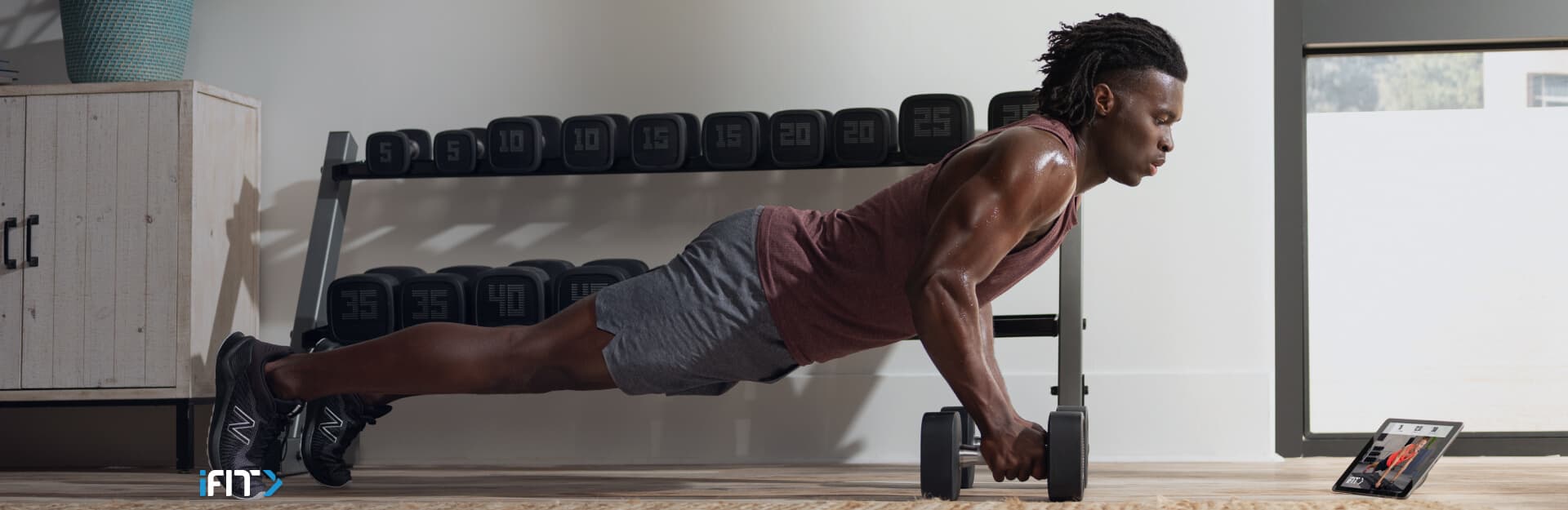
It’s common to hear other fitness enthusiasts talk about a grueling leg workout or a biceps/triceps day that had them feeling fantastic. Chest workouts, however, don’t get the same level of acknowledgment that they should. For the upper body, your chest muscles contribute to plenty of movements! Moving your arms up and down, pressing, and pulling are movements that your chest helps facilitate. Since chest exercises can be beneficial for both men and women, most anyone can find chest workouts incredibly useful, especially for everyday tasks. Chest workouts can be a great deal of fun and provide just as much of a challenge as squats or a bicep circuit. Some of the benefits of chest training might even surprise you! Chest muscle benefits With chest workouts, you’ll notice a majority of benefits in your pectoralis major and pectoralis minor. These muscles make up your “pecs,” which comprise most of your chest. You’ll work these muscles when performing exercises like push-ups, dips, dumbbell flys, and more. While there are many perks of chest training, one of the most useful benefits for both men and women is building functional strength.1 1. Increases muscle thickness A recent study investigated the changes in muscle thickness2 and strength with high-intensity bench press training. A group of seven young men engaged in free-weight bench press training three days a week for 24 weeks. Compared to the group’s pectoralis major and triceps measurements before the 24-week training period, researchers found that the thickness of these muscles was significantly increased at the end of the period. As weight is pressed off the chest, the triceps are activated to help propel the weight upwards. When repeatedly used, muscles must adapt to manage the weight being pressed or pulled. In this case, results indicate that the group’s pectoral muscles and triceps grew in size due to the weighted stimulus. While you may not include free weight bench presses in your chest exercise routine, you can count on your chest workout to help add muscle to your chest (depending on your game plan and workout frequency). Naturally, building strength and muscle in the chest looks different for men and women. In women, breast tissue sits above the pectoralis major muscles. Because of this, they will not see major physical changes in their chests after engaging in regular chest workouts. Although women’s physical appearance won’t drastically shift, they can certainly build strength! For men3, the pectoralis major can become more evident with regular chest training. The lower chest—the pectoralis minor—will also take time to develop with specific movements4, like incline push-ups and parallel dips. Integrating dumbbell presses, dumbbells flys, and other chest-focused exercises into your routine pays off! How do your triceps come into play during chest workouts? The growth of your triceps5 can contribute to chest strength, allowing you to more effectively manage heavier loads. When contracted, your triceps allow you to straighten your arms at your sides or in front of you. This means that these major upper arm muscles contribute to all pressing movements, aiding the arms in both upward and downward motions. When pressing yourself off the floor or dumbbells away from your chest, your triceps power those movements. Unfortunately, the triceps can sometimes become neglected in favor of the biceps, the all-time-favorite part of the arm muscles. As a bonus, developed triceps can also enhance the appearance of the back of the arms! 2. Contributes to upper-body strength output Not only do you have the potential to notice changes in your chest and triceps with chest workouts, but you have the opportunity to also become stronger6 in the process. From an adaptational standpoint, our muscles are designed to grow and strengthen to accommodate different environmental situations. To manage the weight you’re pressing or pulling, your pectoralis major and pectoralis minor muscles must adapt to handle the load. This is why it’s best to start with bodyweight or lower free weights (five- to 10-pound dumbbells), depending on the exercise, so you don’t accidentally overload your pectoral muscles. While it’s great to push yourself, it’s wise not to overdo it. If you can’t perform a repetition without breaking form (no lower back or shoulder involvement), then it’s best to drop down to a more manageable weight. As you master chest exercises, you can gradually increase the weight to keep the movements challenging. Over time, the pectoral muscles will strengthen. For example: Where you struggled to press 10-pound dumbbells a few weeks ago, you may now find this weight much easier to control. If you’re interested in seeing your progress, make a note of the exercises and weight used on your chest workout days. Depending on your workout frequency, you should notice a positive change in your strength output. 3. Improves posture While many of us are guilty of slouching when relaxed, good posture will do your body good in the long run. Since the pectoralis minor muscles7 connect to the ribs (specifically the third, fourth, and fifth ribs), developing them will help you sit up with the shoulder blades retracted more often. While it won’t happen automatically or without practice, keeping the chest “up” will help keep bad posture at bay. Posture is also a significant factor in working out.8 Form is the key to two essential things: safety and exercise performance. No matter which chest exercise or other movements you do, safety must be a top priority. Otherwise, you could pull a muscle or develop a more serious injury. While many chest workouts are done lying on your back, other bodily exercises are performed while sitting or standing up. In these instances, posture must be examined before getting into the movement. This goes for barbell squats, standing bicep curls, lateral raises, overhead presses, and so many other exercises. Total-body benefits Did you know that chest exercises can strengthen your entire upper body?9 We tend to overlook just how crucial our chest muscles are for everyday movements. Think about everything you do: reaching into high cabinets, pushing off the floor, and opening doors. During each action, you engage your chest muscles. 1. Offers greater caloric expenditure As one of the upper body’s biggest muscle groups, your chest muscles are large enough to handle a great deal of weight. Depending on your workout intensity, you can build progressive strength and add muscle to your chest. As the Mayo Clinic10 notes, building muscle tissue through strength training contributes to calorie expenditure. Since your arms and shoulders are innately brought into the mix during chest workouts, you can reap more benefits at one time! During a push-up, your chest, arms, and shoulders must work together for a smooth repetition. When properly executed, movements like push-ups can increase your heart rate and make you break a sweat! 2. Makes everyday tasks more efficient After getting into the groove of chest workouts, you may notice that tasks that were once challenging now require less effort. From hoisting boxes and lifting pets to rearranging furniture and holding an armful of groceries, strengthened chest muscles can make these much easier to manage. As they become stronger, your chest muscles can become more efficient. The stronger your chest muscles become, the stronger your entire upper body can be! Not only is this safer for you, but it may also give you a boost of confidence knowing that you’re becoming stronger! As you feel your strength increase, it could make all the difference in your daily life. After a few months of chest workouts, you may find you no longer have trouble opening tightly sealed jars or bottles. You may find that engaging with your kids feels taxing after holding them or getting back up from playing on their level. Working on your chest muscles can help with both of these movements: holding and pushing. The chest has a huge part to play in your life, and training it can make tasks feel easier. 3. Helps maintain muscular balance Muscular balance is crucial to both appearing symmetrical and avoiding muscle overcompensation. A good example of a muscular imbalance11 would be very developed arms and underdeveloped leg muscles. While it may not seem like a problem, this imbalance could cause overcompensation during exercise or in daily lifting tasks. When the body overcompensates with other muscle groups, like the shoulders or lower back, it creates the potential for injury. For instance, your lower back may come into play during a barbell squat if you have weaker legs. The issue? A lower back injury could be looming, as your back should not be activated in a leg-dominated movement like a squat. How can this be avoided? Muscular balance is the best way to ensure your muscle groups are, to some degree, balanced. This means that you should try to work out every major muscle group, including the chest, as a part of your workout routine. That way, your body will be less dependent on dominant muscle groups. Get started with this chest exercise: push-ups Not quite ready to use weights or machines? It’s easy to get going on building strength in your chest with bodyweight! There are many different types of bodyweight exercises that emphasize the chest muscles and you can try them out in the comfort of your own home. One of these is push-ups, calling your pectoral muscles into action. You’ll also work your shoulders and triceps in this exercise, which makes it incredibly powerful. Here’s how to perform the ideal push-up. Push-up Get into a plank position. Place your hands slightly wider than your shoulders, so your hands, elbows, and shoulders are stacked above each other.Next, with your weight on your arms, lower your body in a straight line until your chest almost touches the floor. (Make sure that everything from your hips to your shoulders drops down as one solid, straight unit).To avoid putting additional stress on your neck, be sure to look forward in front of your fingertips to help keep your neck aligned with your back.Hold, then push yourself back up to your original position.Repeat. Modification: knee push-up Knee push-ups are a great way to ease into this exercise. If you’re a beginner or can’t quite perform a push-up without dipping your back, try these. They’ll reinforce your form and help build the strength needed for a regular push-up! Get into a kneeling position, placing your hands below your shoulders, and knees behind your hips. Your back should be tilted at about a 45-degree angle.Next, curl your toes under, and, with your weight on your hands, lower your chest until it almost touches the floor.Hold, then push yourself back up to your original position.Repeat. Over time, you can modify push-ups to make them more challenging. Perform them at an incline or decline, or change your hand positioning for wide push-ups or diamond push-ups. You can even add claps to your push-ups, making the movement more difficult by bringing core and shoulder stability into the exercise. There are many other ways to modify push-ups, which makes them interesting and keeps boredom at bay. When you feel ready to integrate dumbbells or other equipment into your chest workouts, bodyweight push-ups can still be useful as a warm-up movement or as a part of your main workout routine! iFIT chest workouts Ready to start working on your chest with a personal trainer? With iFIT, you get all of the benefits of a traditional gym right at home. With our easy-to-use fitness app, you can log a challenging chest workout with bodyweight movements or with weights and bands. In your home gym with iFIT, there are so many possibilities! Sign up for an iFIT account today to get full access to our massive workout Library. Here, you’ll find all kinds of chest workouts that will provide the challenge you’re looking for. In any workout you choose, your on-demand personal trainer will guide you through muscle-building exercises that will help you become a stronger version of yourself! Not sure where to start? Try these strength workouts, which feature some awesome chest exercises: Strength Training 101 Series with iFIT Trainer Gideon AkandeResistance Band Miniseries with iFIT Trainer John PeelFunctional HIIT Series with iFIT Trainer Paulo Barreto These strength workouts range in intensity, so select one you feel most comfortable with. If you’re just starting, we recommend Gideon’s Strength Training 101 Series. This series will help you acclimate to strength training, including a chest class introducing those must-have exercises in your routine. More advanced in your fitness journey? Paulo’s HIIT Series will build onto your established strength foundation and, more specifically, help develop your chest muscles! iFIT’s strength training workout series offer chest classes that will push your limits and help you reach your fitness goals! Own an iFIT-enabled elliptical? You can also try one of our elliptical workout series, as these machines are perfect for training the upper body! As you push and pull the machine’s handles, your pectoralis major and pectoralis minor will be in full force! Your chest muscles can get a great workout along with the rest of your body, depending on your workout routine and effort. Best of all, you can do these series as your daily home workout or even in your local gym. Here are 10 of our most popular workout series for ellipticals! References 1. Waehner, P. (2020, December 23). Why you need to work your chest muscles. Verywell Fit. https://www.verywellfit.com/your-best-chest-1229817. 2. Ogasawara, R., Thiebaud, R. S., Loenneke, J. P., Loftin, M., & Abe, T. (2012). Time course for arm and chest muscle thickness changes following bench press training. Interventional Medicine & Applied Science. https://doi.org/10.1556/IMAS.4.2012.4.7. 3. Healthline Editorial Team. (2018, January 23). Pectoralis major. Healthline. https://www.healthline.com/human-body-maps/pectoralis-major-muscle#1. 4. Eske, J. (2019, February 19). What are the best lower chest exercises? Medical News Today. https://www.medicalnewstoday.com/articles/324490. 5. Healthline Editorial Team. (2018, January 21). Triceps brachii. Healthline. https://www.healthline.com/human-body-maps/triceps#1. 6. Waehner, P. (2020, December 23). Why you need to work your chest muscles. Verywell Fit. https://www.verywellfit.com/your-best-chest-1229817. 7. Healthline Editorial Team. (2018, January 19). Pectoralis minor. Healthline. https://www.healthline.com/human-body-maps/pectoralis-minor#1. 8. Rellinger, D. (2016, December 22). Regular breathing and proper posture when exercising is important. MSU Extension. https://www.canr.msu.edu/news/regular_breathing_and_proper_posture_when_exercising_is_important. 9. Waehner, P. (2020, December 23). Why you need to work your chest muscles. Verywell Fit. https://www.verywellfit.com/your-best-chest-1229817. 10. Mayo Clinic Staff. (2020, November 10). Metabolism and weight loss: How you burn calories. Mayo Clinic. https://www.mayoclinic.org/healthy-lifestyle/weight-loss/in-depth/metabolism/art-20046508. 11. Frothingham, S. (2020, February 27). What causes muscle imbalances and how to fix them. Healthline. https://www.healthline.com/health/muscle-imbalance. Disclaimer: This blog post is not intended to replace the advice of a medical professional. The above information should not be used to diagnose, treat, or prevent any disease or medical condition. Please consult your doctor before making any changes to your diet, sleep methods, daily activity, or fitness routine. iFIT assumes no responsibility for any personal injury or damage sustained by any recommendations, opinions, or advice given in this article. Always follow the safety precautions included in the owner’s manual of your fitness equipment.
June 25, 2021
Read More
Series Feature: Redefine Fitness Strength Series
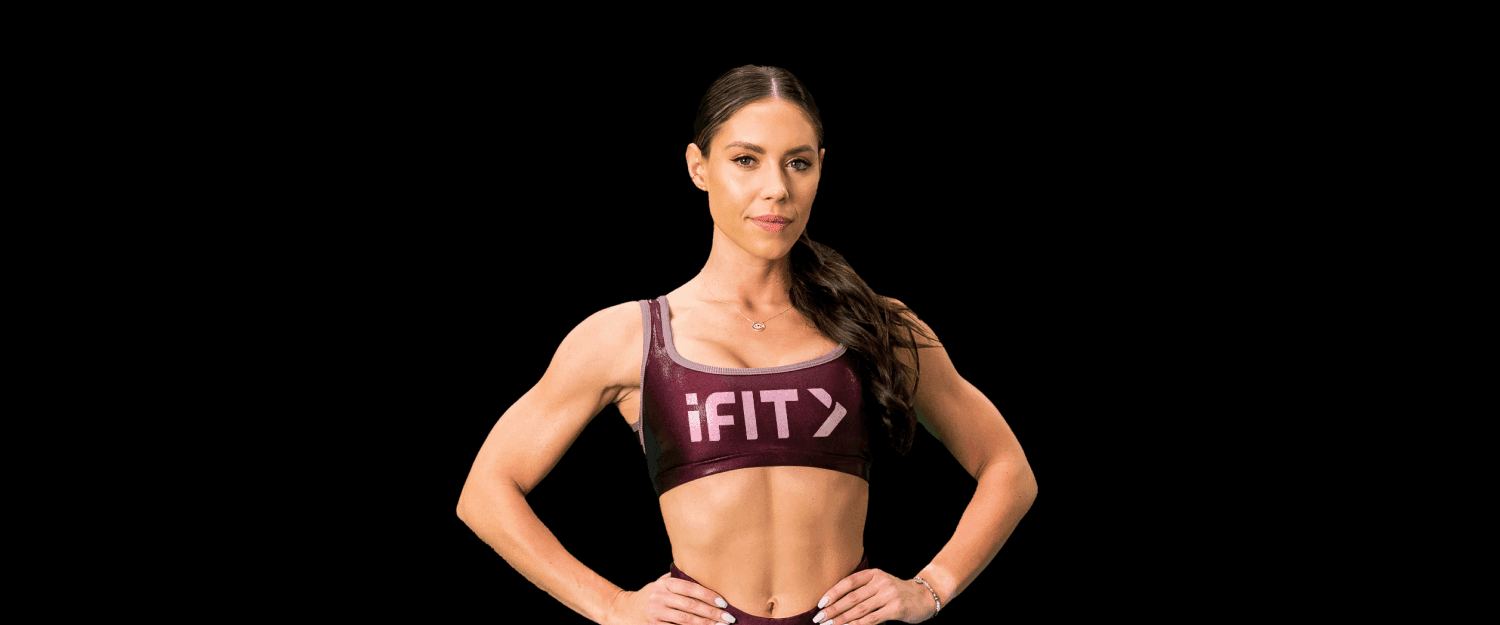
Start building a strong foundation for all your fitness goals with iFIT Trainer Kelsey Wells! The Redefine Fitness Strength Series takes a comprehensive approach to total-body training, so get ready to work your legs, back, chest, shoulders, abs, and arms every week throughout this series. All you need to get started is a pair of dumbbells and a positive mindset! About iFIT Trainer Kelsey Wells iFIT Trainer Kelsey Wells found her voice when she shared her own through anxiety and postpartum struggles online – along with her message encouraging women to redefine fitness as a tool for self-empowerment. Women have resonated with Kelsey’s honest vulnerability ever since, making her one of the world’s most sought-after personal trainers. Excited to expand her community through iFIT, Kelsey can’t wait to continue helping others redefine fitness, focus on self-love, find inner strength, and lift weights without intimidation. About the iFIT Studio With your iFIT Trainer cheering you on, incredible music (that you can change based on your musical interests!), and engaging workouts, the iFIT Studio delivers the energy of a studio workout directly to you! In this series, you’ll work one-on-one with Kelsey in the iFIT Studio. About the workouts iFIT Trainer Kelsey Wells will set an intention before each workout, helping you find your focus before getting started. Using bodyweight or dumbbells, she’ll coach you through strength-building intervals and supersets, which become more challenging each week. Along with becoming stronger, these workouts will tone your body and even provide a mental boost thanks to Kelsey’s affirmations! Ready to get started? Join the Redefine Fitness Strength Series! Disclaimer: This blog post is not intended to replace the advice of a medical professional. The above information should not be used to diagnose, treat, or prevent any disease or medical condition. Please consult your doctor before making any changes to your diet, sleep methods, daily activity, or fitness routine. iFIT assumes no responsibility for any personal injury or damage sustained by any recommendations, opinions, or advice given in this article. Always follow the safety precautions included in the owner’s manual of your fitness equipment.
January 2, 2018
Read More