
New Nutrition Label Explained
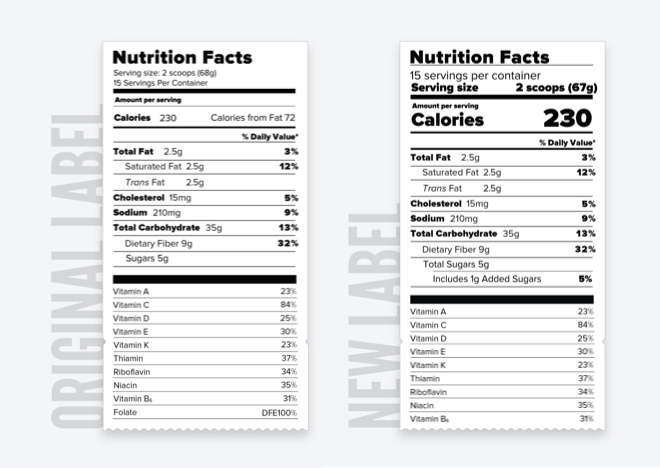
In May 2016, the FDA announced that changes were going to be made to all nutrition labels. If you have been looking at food labels, you may have noticed that some of them already look slightly different while others are still in the same format that we are used to. The main reason for this is because the FDA has given manufactures time to prepare the new format and account for the costs these changes will take. They have even extended the compliance date from July 2018 to January 2020 for companies making more than 10 million dollars and to January 2021 for companies making less than that. However, you should continue to see more and more food labels taking on the new format.
What’s new
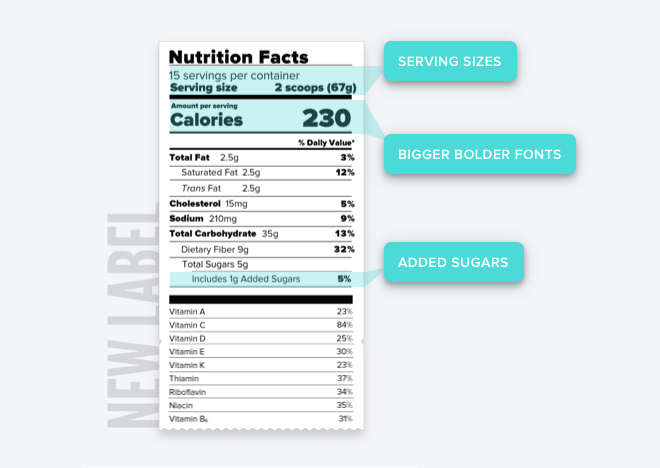
Bigger and bolder fonts
The FDA will require all labels to have larger, bolder fonts, making products quicker and easier to compare, so we, as consumers, can choose the best options. They have enlarged and bolded the font for calories, servings per container, and serving size. You will no longer need to use that magnifying glass to read the small text on some food items.
Added sugars
My favorite change is that the new labels will now have added sugars listed in grams and percent daily values!! Is sugar in a donut the same as sugar in an apple? Well, yes and no. While both taste sweet, one is naturally occurring while the other is added. Naturally occurring sugar in foods like fruit, vegetables, and dairy are also accompanied with other good things such as vitamins, minerals, and fiber. I can’t tell you how many times I’ve helped people with their diet who tell me they are cutting back on fruit because “eating an apple is just as bad for you as eating a candy bar.” Yes, I have actually been told this and many other things similar to this! Hopefully, by listing the added sugar on food labels, more people will understand that there is a difference between naturally occurring sugars and those that are added. This will be a huge game changer for food items such as yogurt, because you will easily be able to tell if the sugar is coming from the milk, fruit, or additives from the manufacturer.
Serving sizes
Another change that I am very excited for is serving sizes. The FDA has previously created serving sizes based on the average person’s consumption. The original food label is over 20 years old!! A lot of things have changed since the last food labels were made, including what people consider to be a serving size and the packaging of food items. And yes, packaging does play a huge role into what serving sizes are. How much you eat is directly affected by the container holding your food. Some companies have used serving size in the past to their advantage by giving you more than one serving in what appears to be a single-serving item, but in reality is two. For example, if a typical consumer is given a 20-ounce soda, they would most likely drink the entire soda and consider that a single serving size. Upon closer inspection of the food label, they would discover that the bottle actually contains two-and-a-half servings! And yes, that means you have to multiply everything else on the label by two-and-a-half, so they would have consumed way more calories and sugar than what they originally intended. The new nutrition label will insure that individually sold items are now listed as one serving with true calories to reflect that. There will even be a dual column for larger packages stating the calories per serving as well as the calories in the whole package. This will make manufactures more straightforward, so we, as the consumers, will be better informed about our food choices.
Fat
Some people may not like this one, but calories from fat is going to be removed from the labels. The label, however, will still have total fat, trans fat, and saturated fat. The reason for this is that new research has shown that the type of fat is more important to people’s health than the amount of calories consumed from fat. I am actually pretty pleased with this change, because, for a long time, we have lived in a pretty fat-phobic society. But fat means satiety, energy, flavor, and so much more! I am not saying that we need to go out of our way to eat a super high-fat diet, but typically, diets that are low in fat are higher in sugar. Keeping a diet that has a good amount of healthy fats can help with appetite control, stable blood sugars, and consistent energy.
Remember that these changes are made to keep up with the latest research in nutrition. Since nutrition is an ever-evolving science, it is necessary to make these improvements. These changes are not made just for the sake of a new look; the FDA has spent a lot of time and research to make sure that the the new nutrition labels will better inform consumers. If you want to read more about all of the changes to come, check out the FDA's site.
Michelle Alley
iFit Nutritionist BS
Follow Michelle on Instagram!
@refuelwithmichelle
You might also like
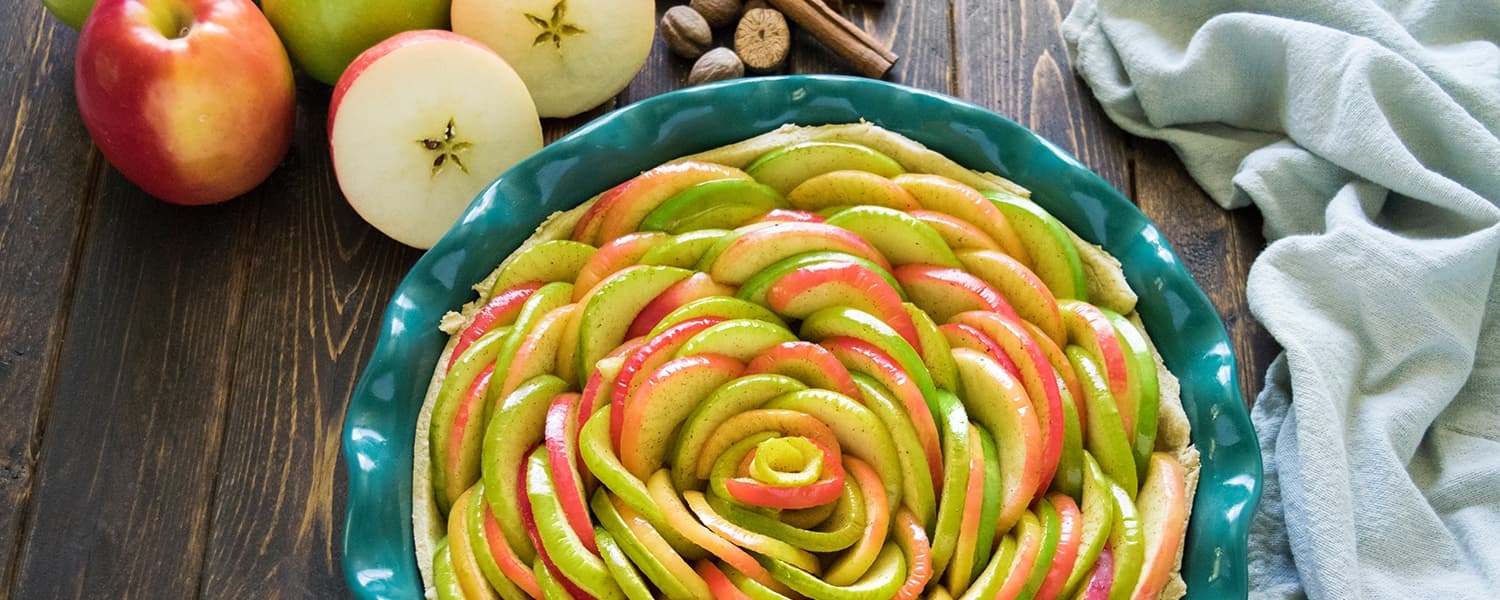
Apple Rose Pie
Ingredients For the pie crust ½ cup all purpose flour ¾ cup whole wheat flour 1 tablespoons sugar ¼ teaspoon salt 2 tablespoons cold unsalted butter, cut into small pieces 2 Tablespoons nonfat Greek yogurt 1 ½ tablespoons vegetable oil 2 tablespoons ice water For the filling 3 Pink lady apples 3 Granny Smith apples 1 tablespoon lemon juice ¼ cup brown sugar ¼ cup granulated sugar 1 teaspoon cinnamon ¼ teaspoon nutmeg Directions Combine flour, sugar, and salt in a medium bowl. Cut in butter with a pastry blender until crumbly. Mix in the Greek yogurt and vegetable oil. Add water, 1 tablespoon at a time, and combine with a fork until the mixture can form a ball. Lightly flour some plastic wrap, then place the dough on top. Flatten out dough. Cover with plastic wrap, then place in the fridge for 20 minutes. While dough is chilling, preheat oven to 425°F. Remove dough from fridge. Roll out on a floured surface to ⅛ thickness. Place dough in a 9-inch pie pan, then trim the edges. While oven is preheating cut the apples into thin semi-circle shapes leaving the skin on. Toss the apples in a large pot with the lemon juice, brown sugar, granulated sugar, cinnamon and nutmeg. Heat on medium high heat just until the apples are soft enough to bend without breaking about ten minutes. And remember to save the juice. Carefully arrange the apple slices around the apple pie crust starting with the outside and making your way to the center of the pie. Once you get to the center of the pie take small pieces and bend them around each other to create the center of the rose. Try to make the apples as compact as possible and go back and fill in any spots as necessary. You should be able to get all six apples in it. Drizzle the leftover juice over the apples and bake for 30-45 minutes. Cut into 8 equal slices and enjoy! NUTRITIONAL INFO PER SERVING Calories 240 (50 from fat) Total fat 6g Saturated fat 2g Cholesterol 10mg Sodium 75mg Carbohydrate 45g (5g dietary fiber, 26g sugar) Protein 3g WARNING: This post is not intended to replace the advice of a medical professional. The above information should not be used to diagnose, treat, or prevent any disease or medical condition. Please consult your doctor before making any changes to your diet, sleep methods, daily activity, or fitness routine. iFit assumes no responsibility for any personal injury or damage sustained by any recommendations, opinions, or advice given in this article.
May 13, 2017
How to Make Soup a Nutrition Super Star
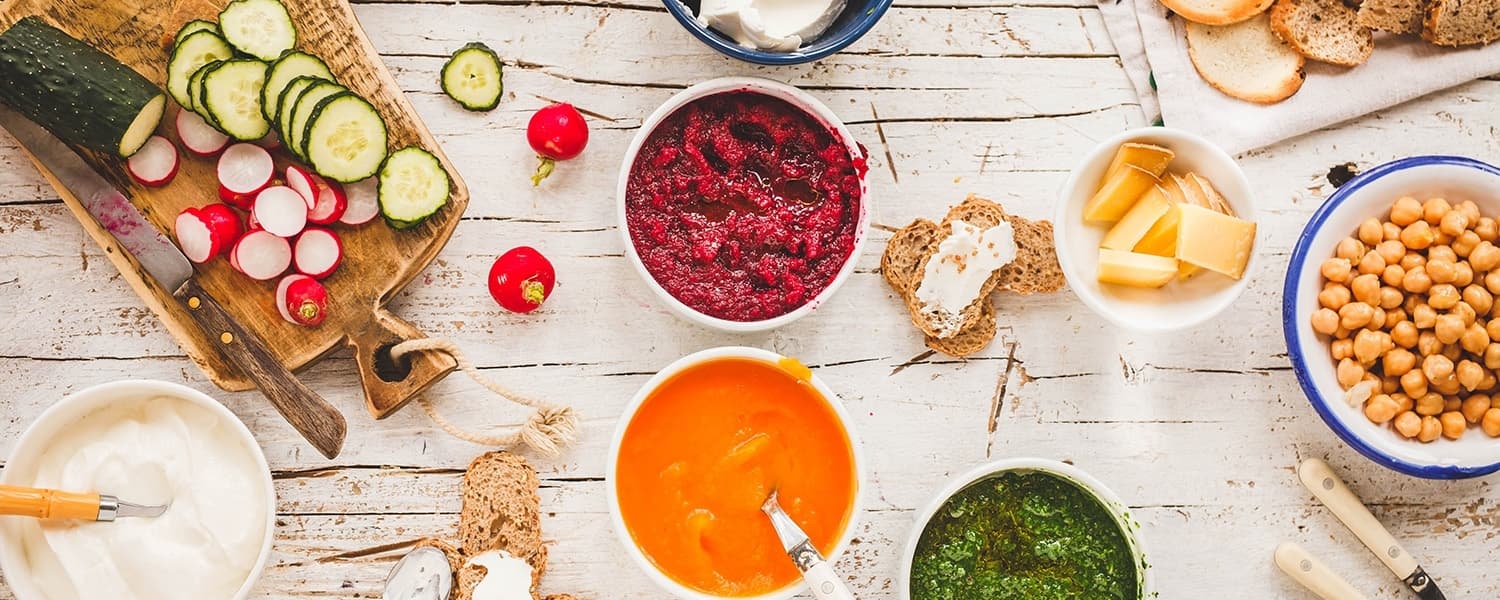
There’s something so comforting, warming, and nostalgic about soup. I mean, who doesn’t want chicken noodle soup when they’re sick, or chili after a cold day playing in the snow? Now, you might be thinking, “Yeah, I love soup...as an appetizer!” Soup is often not viewed as satiating enough to be a meal unless it’s full of cream and calories. Lighter soups are often paired with bread, salad, and even large entrées. However, soup done right can be filling, healthy, and all you need for you next meal. There are a few tricks I can teach you to make your next soup a “souper star!” Forgive me...I had to say it!Veggies, veggies, veggiesSoup is the perfect vehicle to pack in an array of vegetables. Aim to include at least 3 vegetables of different colors, preferably. The color of vegetables is important, because it corresponds with various nutrients and phytochemicals your body needs. Each color contains vital nutrients, including vitamins, that play important roles in disease prevention and overall health. Also, veggies provide fiber to fill you up so you’re not as hungry throughout the rest of the day.Pack in proteinIt’s important to get adequate protein at every meal. In soup, it can come in a variety of forms. Meat, legumes, whole grains, Greek yogurt, and tofu can all be great additions to help your soup pack a powerful punch and feel like a real meal. For vegans or vegetarians, if your soup is still lacking, try adding in a vegan protein powder. This works well for strongly-flavored, thick soups like stews, curry, etc. However, make sure you don’t use a sweet protein powder if you want a salty flavor. I made the mistake of mixing vanilla vegan protein powder with lentil soup once. Yuck!Replace the creamCreamy chicken and wild rice, loaded potato, butternut bisque, creamy tomato...no doubt creamy based soups are popular and yummy! However, they’re also loaded with calories and saturated fat. Instead, replace the cream with nonfat Greek yogurt (add at the end to prevent curdling), a basic white roux, milk and cornstarch, silken tofu, or a vegetable puree (such as cauliflower, potato, or butternut squash). The type of sub you choose will depend on your soup, but you can definitely enjoy creamy soup without the heavy cream.Watch the sodiumThe biggest pitfall that keeps soup from entering the nutrition big leagues is the sodium content. Most soups are high in sodium. Even if you don’t add salt to your soup, it still might be super high from canned goods, processed foods, and salty seasoning mixes. The average American diet is super high in salt, and we’ve come to expect all food to be well-salted. To make soup a nutritious super star, aim to have your soup be maximum 700 mg per serving (preferably much lower). Skip canned items and go for fresh or frozen. If you need to get canned foods, buy a low-sodium version and rinse the contents well. Be careful with sodium-packed items like soy sauce, bouillon, spice mixes, etc. Now, once you take out the salt, it might seem like your soup is lacking in flavor. To make up for that, be sure to load up on fresh herbs and spices. For a salty flavor, my favorite substitute is vinegar, which taste salty without the sodium. My favorites are red wine and balsamic. Believe me, you can get big flavor without the salt shaker.Keep it wholeHave fun with your soup and add in any seasonal whole foods you’d like. Soup is a great way to use leftovers or large garden harvests. Just aim to keep the ingredients whole. Whole grains, vegetables, lean meats, legumes, fresh herbs, and spices are all great. Try to avoid lots of processed foods like cream-based soups, mixes, processed cheese, etc. Often, when I have lots of veggies to use such as zucchini, broccoli, onions, green beans, potatoes, carrots, and celery, I’ll chop them all up and put them either in a tomato-based soup with a little balsamic vinegar or with chicken and lots of fresh herbs. Soup is one of those foods that just needs a big pot and fresh ingredients, but for recipe lovers, check out the soup recipes on our blog.By making a few changes, you can have a delicious, comforting soup, healthy enough to make the nutrition big leagues. So grab a spoon and let's get cooking!Megan Ostler MS, RDNiFit DietitianSoup Recipes SamplingsSlow Cooker Beef and Barley Stewhttp://www.ifit.com/blog/slow-cooker-beef-and-barley-stew/Skinny Loaded Baked Potato Souphttp://www.ifit.com/blog/skinny-loaded-baked-potato-soup/Thai Carrot Souphttp://www.ifit.com/blog/thai-carrot-soup/WARNING: This post is not intended to replace the advice of a medical professional. The above information should not be used to diagnose, treat, or prevent any disease or medical condition. Please consult your doctor before making any changes to your diet, sleep methods, daily activity, or fitness routine. iFit assumes no responsibility for any personal injury or damage sustained by any recommendations, opinions, or advice given in this article.
February 20, 2016
Fresh Fall Produce
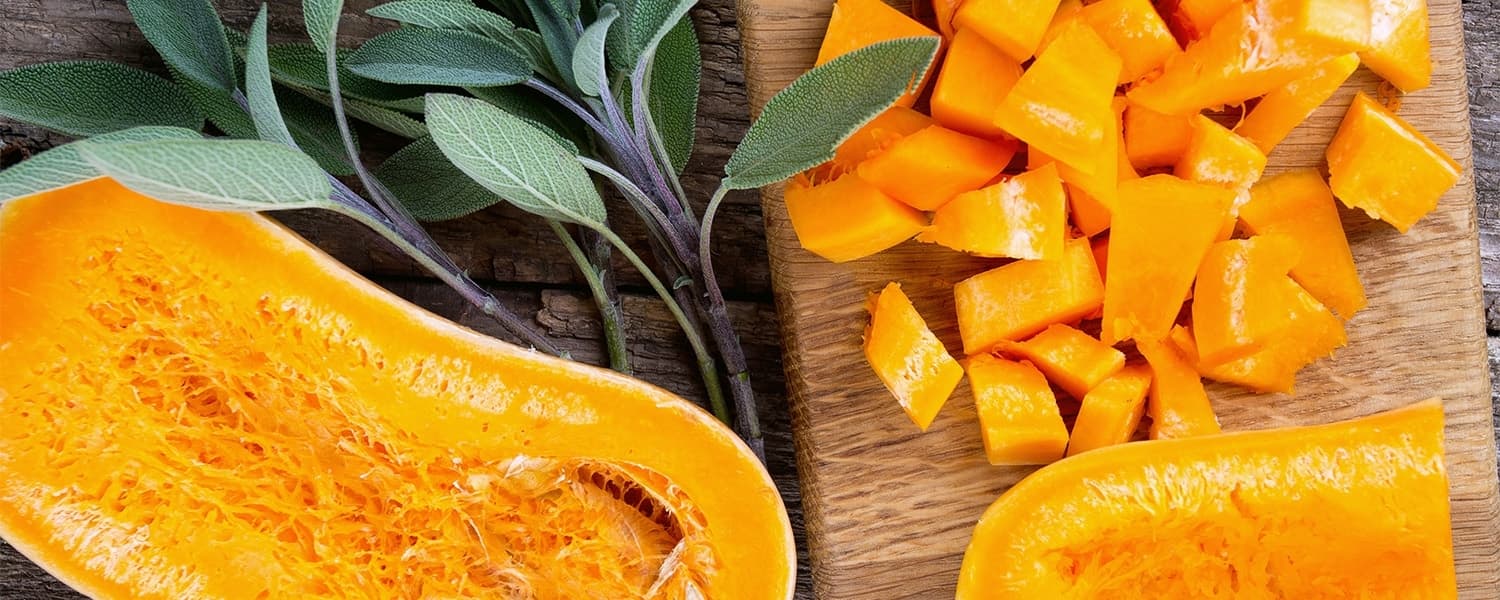
There’s so much fresh produce during the fall! What I look forward to most every year are honeycrisp apples. I eat almost three a day because I just can’t get enough! They’re so delicious. But there’s much more yummy goodness in the fall than just fresh apples. Look for the following five items at your local farmers’ market or grocery store, then use them in the five delicious recipes linked below!1. CornFrom corn mazes to corn on the cob, nothing sounds more like fall. The time corn is harvested varies from year to year, but it’s most frequently harvested in mid-September or early October. Try our fresh corn salad that’s the perfect side dish for any meal!https://www.ifit.com/blog/fresh-corn-salad2. PumpkinsWhether you want to carve them or eat them, pumpkins are a must in the fall. And forget the cookies! Try our wild rice stuffed mini pumpkins.https://www.ifit.com/blog/wild-rice-stuffed-mini-pumpkins3. BroccoliIt’s not always the kids’ favorite, but give this recipe a try. They won’t even know it’s in there!https://www.ifit.com/blog/warm-broccoli-cheese-dip4. Sweet potatoesThey seem to go right along with Thanksgiving, but why not have them more than once a year? Our mashed orange sweet potatoes are oh so tasty!https://www.ifit.com/blog/orange-mashed-sweet-potatoes5. ApplesI’ve said it before and I’ll say it again. Fall apples are my favorite! They’re so good plain, with peanut butter, or even cooked. You just can’t go wrong. Use your apples in this flavorful apple cider recipe.https://www.ifit.com/blog/gravenstein-apple-cider/These are just a few options. The possibilities are endless when it comes to produce this time of year. We want to hear all about your favorite falltime recipes. Share them with us in the comments!Happy fall eating!Hannah Mackintosh WARNING: This post is not intended to replace the advice of a medical professional. The above information should not be used to diagnose, treat, or prevent any disease or medical condition. Please consult your doctor before making any changes to your diet, sleep methods, daily activity, or fitness routine. iFit assumes no responsibility for any personal injury or damage sustained by any recommendations, opinions, or advice given in this article.
October 26, 2015


